Check out other Idioms
Rank and File Idiom: Meaning, Origin, Usage & Exercises
In the IELTS exam, students are often asked to discuss topics like leadership, teamwork, workplace roles, or government systems. In such contexts, using useful idioms for IELTS Speaking to score band 8.0+, such as ‘rank and file’, can add fluency and lexical flexibility to your language. This blog explores the meaning, origin, and IELTS-specific usage of the 'rank and file' idiom, along with exercises to solidify your understanding. Rank and File Idiom: Meaning The idiom ‘rank and file’ refers to the ordinary or lower-level members of an organisation, such as employees, workers, soldiers, or party members, as opposed to leaders or...

5 min read
Updated On
To Go Pear-Shaped Idiom: Meaning, Origin, Usage & Exercises
If you are preparing for the IELTS and want to showcase native-like fluency, idioms like ‘to go pear-shaped’ can be powerful additions to your vocabulary, particularly when discussing plans, problems, or unexpected outcomes. This idiom is especially handy for IELTS Speaking Part 2 or 3, where candidates often talk about plans gone wrong, mistakes, or dealing with failure. It captures a sudden shift from success to failure, and using it correctly shows a strong lexical resource. This blog explores the meaning, origin, and IELTS-specific usage of the 'to go pear-shaped' idiom, along with exercises to solidify your understanding. Check out the short...
6 min read
Updated On
Done to a Turn Idiom: Meaning, Origin, Usage & Exercises
When you have a meal at your favourite restaurant or any eatery, you enjoy it because it is perfectly cooked. Since food and restaurants are common topics in IELTS, you need to add more vocabulary related to this topic instead of repeating phrases like ‘perfectly cooked’. This is where the idiom ‘done to a turn’ can help you out. Though culinary in origin, it also serves metaphorical uses in academic writing and high-level conversation. In this blog post, we will explore the meaning, origin, and usage of the idiom ‘done to a turn’, and provide examples for IELTS Speaking and Writing. Done...
4 min read
Updated On
The Silent Majority Idiom: Meaning, Origin, Usage & Exercises
In the realm of public opinion and political discourse, one expression that often surfaces in speeches and debates is ‘the silent majority’. For IELTS test-takers, particularly in Speaking and Writing tasks that explore topics like society, government, or protest movements, mastering useful idioms for IELTS Speaking to score band 8.0+ like this one, can give your language a sophisticated edge. In this blog, we will explore the meaning, origin, and usage of the idiom ‘the silent majority’ and provide examples from the IELTS exam. To learn more idiomatic expressions, check out the video below for a few more that will help you...
5 min read
Updated On
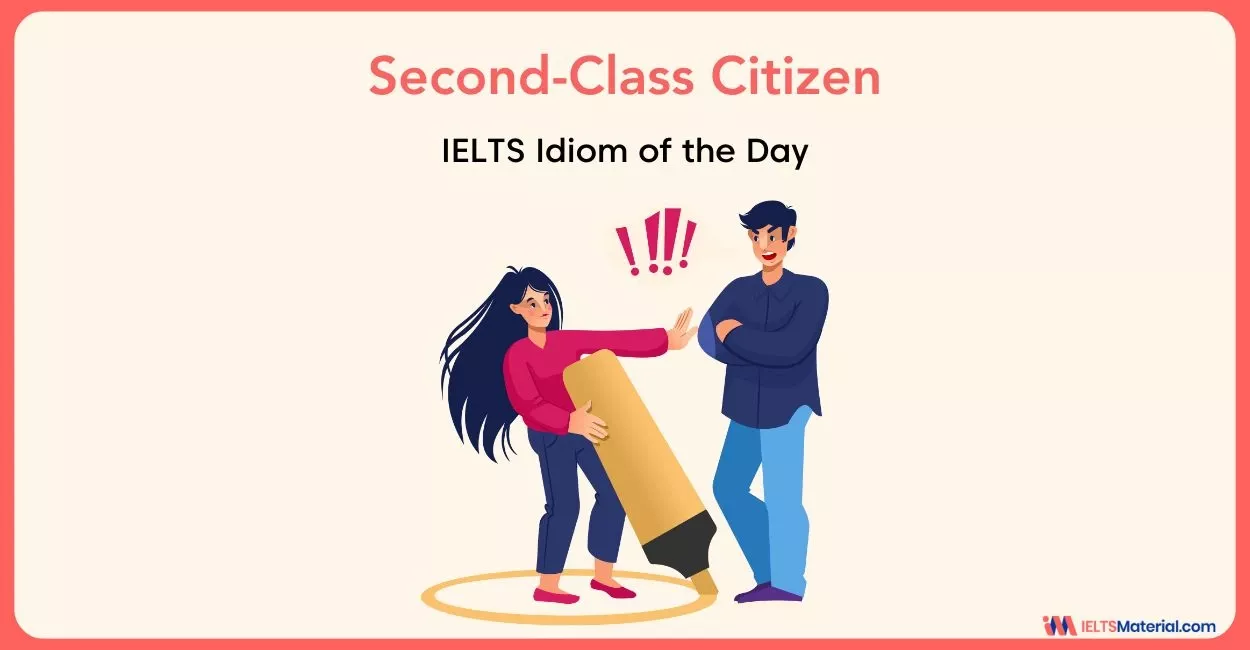
Second-Class Citizen Idiom: Meaning, Origin, Usage & Exercises
In IELTS, sometimes you might come across topics related to discrimination in the speaking or writing task. In such cases, especially in IELTS Speaking Part 3 and Writing Task 2, you can use the idiom, second-class citizen, to express how a person’s rights and opportunities are treated as less important than those of other people in the same society. In this blog, we will explore the meaning, origin, and usage of the idiom second-class citizen, and provide examples for IELTS Speaking and Writing. Remember, you can use mind maps to improve your IELTS vocabulary and etch such idioms and phrases in your memory. Second-Class...
4 min read
Updated On

A Self-Made Man Idiom: Meaning, Origin, Usage & Exercises
In IELTS Speaking and Writing, examiners often discuss success, your personal achievements, career journeys, or even describe a person you love/like/admire. The idiom ‘a self-made man’ fits seamlessly in such contexts. It reflects not only a rich vocabulary but also cultural awareness of what it means to achieve success without privilege, support, or inherited wealth, a core theme in many IELTS topics related to work, education, and personal development. In this blog, we will explore the meaning, origin, and usage of the idiom ‘a self-made man’, and provide examples for IELTS Speaking and Writing. A Self-Made Man Idiom: Meaning A self-made...
5 min read
Updated On
A Different Kettle of Fish Idiom: Meaning, Origin, Usage & Exercises
Idioms like ‘a different kettle of fish' are the secret sauce to boosting your IELTS band score, especially in IELTS Speaking Part 3 and Writing Task 2, where you need to compare ideas, explore alternatives, or analyse contrasts. Unlike overused phrases like ‘on the other hand’, this idiom allows you to introduce subtle differences between topics, issues, or people with native-like flair. In this blog, we will explore the meaning, origin, and usage of the idiom ‘a different kettle of fish’, and provide examples for IELTS Speaking and Writing. There is an additional treat for you! In the video below, learn some...
7 min read
Updated On
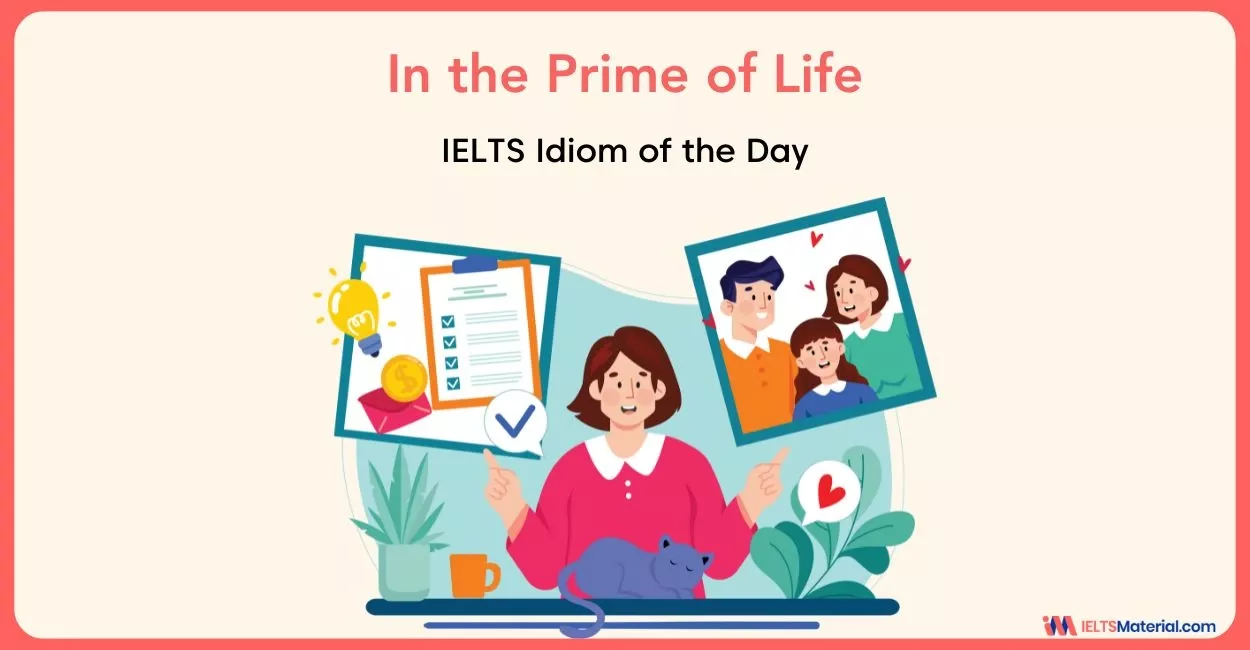
In the Prime of Life - Idiom of the Day for IELTS
Age-related topics frequently appear across IELTS, from discussions about generational differences to health and ageing. One powerful and common idiom in IELTS Speaking that can instantly enrich your answers is ‘in the prime of life’. This expression is especially useful when describing people at their physical, intellectual, or emotional peak, and it can make your descriptions more expressive, mature, and memorable. This blog explores the meaning, origin, and IELTS-specific usage of the 'in the prime of life' idiom, along with exercises to solidify your understanding. In the Prime of Life Idiom: Meaning The idiom ‘in the prime of life’ refers to the...
6 min read
Updated On

Let Sleeping Dogs Lie Idiom: Meaning, Origin, Usage & Exercises
If you wish to achieve Band 7 and above, especially in the speaking module, it is mandatory to upgrade your word list with the latest IELTS Speaking vocabulary to boost your score and sound natural. In order to sound native-like, you have to use idioms, like ‘let sleeping dogs lie’, to add depth to your expression and opinion. In this blog post, we will explore the meaning, origin, and usage of the idiom ‘let sleeping dogs lie’ and provide examples from the IELTS exam. Before you move on to further details of this specific idiom, check out the video below to learn...
6 min read
Updated On

Bear Fruit Idiom: Meaning, Origin, Usage & Exercises
Preparing for an exam like IELTS is considered a success only when you achieve your desired scores. To do so, it is important, especially in IELTS Speaking, to sound natural while answering the questions or the cue card by using common yet expressive idioms, like ‘bear fruit’. In this blog post, we will explore the meaning, origin, and usage of the idiom ‘bear fruit’, and provide examples for IELTS Speaking and Writing. Bear Fruit Idiom: Meaning The idiom ‘bear fruit’ means to achieve a desired result after consistent effort, demonstrating success, or producing positive results. Usually, the phrase refers to plans, investments,...
5 min read
Updated On

Play One's Ace Idiom: Meaning, Origin, Usage & Exercises
In high-stakes communication, whether you are in a negotiation, interview, or academic argument, knowing when and how to use your strongest point can make all the difference. The idiom ‘play one’s ace’ captures this powerful strategy and is a brilliant addition to your IELTS Speaking and Writing vocabulary, particularly in topics involving competition, strategy, education, and leadership. In this blog, we will explore the meaning, origin, real-life usage, and examples of this idiom that are specific to IELTS, followed by exercises to solidify your understanding and boost your confidence. Play One's Ace Idiom: Meaning To ‘play one’s ace’ means to use one’s...
6 min read
Updated On

Once in a Blue Moon Idiom: Meaning, Origin, Usage & Exercises
In the world of English idioms, some expressions are so vivid and imaginative that they instantly capture attention, and ‘once in a blue moon’ is one of them. This idiom is both poetic and practical, making it a valuable tool for IELTS candidates aiming for higher band scores in IELTS Speaking and sometimes in the writing module. In this blog, we will explore the meaning, origin, real-life usage, and IELTS-specific examples of this idiom, followed by challenging exercises to deepen your understanding and boost your confidence. Once in a Blue Moon Idiom: Meaning The idiom ‘once in a blue moon’ refers to...
6 min read
Updated On
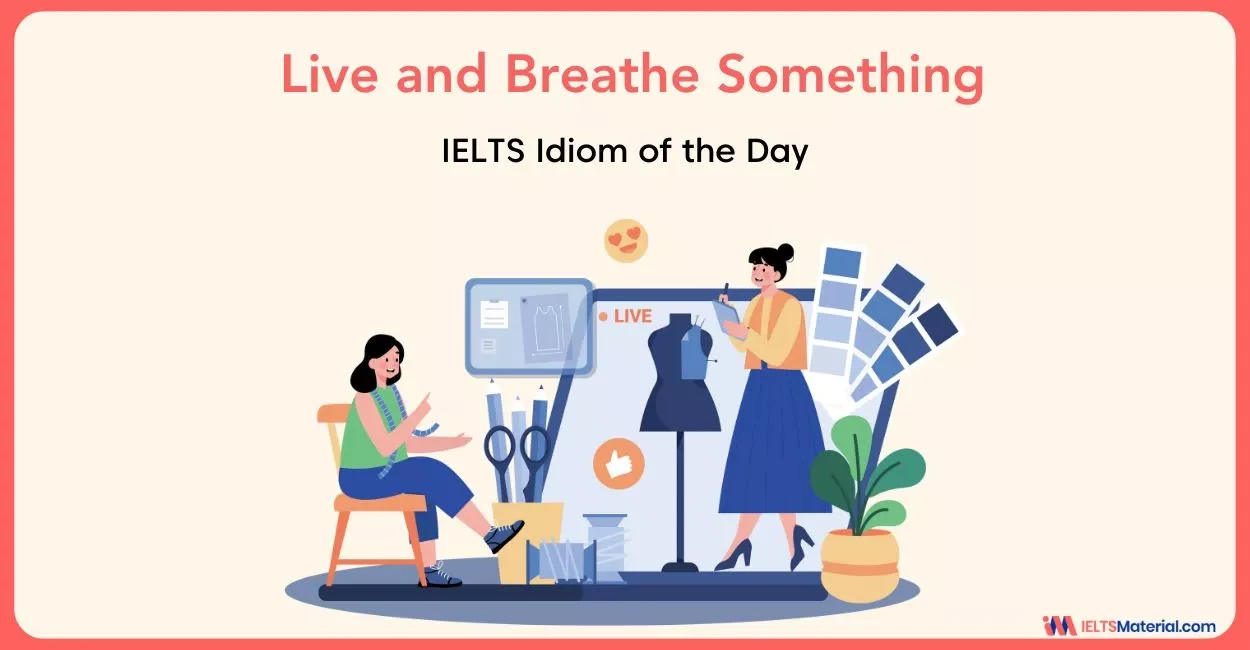
Live and Breathe Something Idiom: Meaning, Origin, Usage & Exercises
While you are preparing for IELTS, especially for the speaking module, using common idioms in IELTS Speaking, like ‘live and breathe something’ can elevate your vocabulary band score. This idiom is particularly useful in describing dedication, passion, or obsession with a subject or activity, which is a common theme in IELTS questions about work, hobbies, technology, and personal development. In this blog post, we will explore the meaning, origin, and usage of the idiom, ‘live and breathe something, and provide examples for IELTS Speaking and Writing. Live and Breathe Something Idiom: Meaning ‘To live and breathe something’ is an idiomatic expression that...
6 min read
Updated On
Keep/Have One’s Finger on the Pulse (of something) Idiom: Meaning, Origin, Usage & Exercises
In an increasingly fast-paced world, being aware of what’s happening right now, whether in business, fashion, politics, or technology, is crucial. The idiom ‘keep (or have) one’s finger on the pulse' reflects this idea of staying informed, aware, and up-to-date. It is a powerful expression used in both spoken and written English and can add fluency and authority to your answers when talking about trends, current events, innovation, or personal awareness. In this blog post, we will explore the meaning, origin, and usage of the idiom, ‘keep/have one’s finger on the pulse (of something)’, and provide examples for IELTS Speaking and Writing....
7 min read
Updated On
Be the Spitting Image of Somebody Idiom: Meaning, Origin, Usage & Exercises
In everyday conversation, we often talk about how people resemble their parents, siblings, or even celebrities. Rather than simply saying, “She looks like her mother”, English speakers frequently reach for a colourful idiom: “She’s the spitting image of her mother”. This vivid expression adds emphasis, emotion, and imagery, making it a strong tool in descriptive speaking and writing, especially in IELTS Speaking Part 2 (describing people) or Part 1 (family and appearance). In this blog post, we will explore the meaning, origin, and usage of the idiom ‘be the spitting image of someone’, and provide examples for IELTS Speaking. Be the Spitting...
6 min read
Updated On

Home away from Home Idiom: Meaning, Origin, Usage & Exercises
Most young people leave their own city or country for different reasons, like job, education, health, etc. Even IELTS aspirants are preparing to move to a foreign country, making questions about leaving home an important topic of discussion. So, learning common idioms in IELTS Speaking, like ‘home away from home’ is essential to boost your vocabulary as well as fluency as a native. In this blog post, we will explore the meaning, origin, and usage of the idiom ‘home away from home’, and provide examples for IELTS Speaking. Home away from Home Idiom: Meaning The idiom ‘home away from home’ refers...
6 min read
Updated On
Cash-flow Problem - Idiom of the Day for IELTS
In IELTS Speaking and Writing, the ability to talk about business, economics, and financial struggles can set you apart. Idioms can strengthen your lexical resource score, especially in IELTS Speaking Part 3 or Task 2 essays about money management, employment, or small businesses. One such phrase is ‘cash-flow problem’, a precise, real-world idiom rooted in finance that can express hardship without sounding vague or repetitive. This blog explores the meaning, context, usage, origin, and application of the ‘cash-flow problem’ idiom for IELTS candidates targeting Band 7.0 or above, along with exercises and answer keys. Cash-flow Problem Idiom: Meaning A cash-flow problem refers...
5 min read
Updated On
Pay through the Nose Idiom: Meaning, Origin, Usage & Exercises
Idiomatic language plays a crucial role in achieving a high score in the IELTS exam, especially for the speaking section. ‘Pay through the nose’ idiom is one such idiom that frequently appears in discussions about money, lifestyle, travel, or complaints. Whether you are describing overpriced rent, costly healthcare, or inflated tourist prices, this idiom adds a vivid, native-level touch to your language. In this blog post, we will explore the meaning, origin, and usage of the idiom, ‘pay through the nose’, and provide examples for IELTS Speaking and Writing. Pay through the Nose Idiom: Meaning The Cambridge Dictionary defines ‘pay through the...
6 min read
Updated On
Time after Time - Idiom of the Day for IELTS
When preparing for the IELTS exam, using natural idiomatic expressions like ‘time after time’ can elevate your lexical resource score and help you sound more fluent and natural. This idiom is frequently used in both spoken and written English to emphasize repetition, persistence, or reliability, making it especially useful in IELTS Speaking Part 2 or Part 3 responses. In this blog, we will explore the time after time idiom meaning, origin, and usage of the idiom, and provide examples for IELTS Speaking and Writing. Time after Time Idiom: Meaning The idiom ‘time after time’ means something happens repeatedly, again and again, or...
5 min read
Updated On
Through and Through - Idiom of the Day for IELTS
Common idioms, like through and through, when used appropriately in the IELTS exam, can help you achieve a band score of 8 and above. They add a natural touch and fluency to your answer, as natives often use them in their daily speech. As a result, learning the meaning and correct usage is essential for IELTS aspirants. In this blog post, we will explore the meaning, origin, and usage of the idiom ‘through and through’, and provide examples for IELTS Speaking and Writing. Through and Through Idiom: Meaning The idiom, ‘through and through’ means completely, entirely, or in every way. It often...
5 min read
Updated On