Check out other Word of the Day Articles
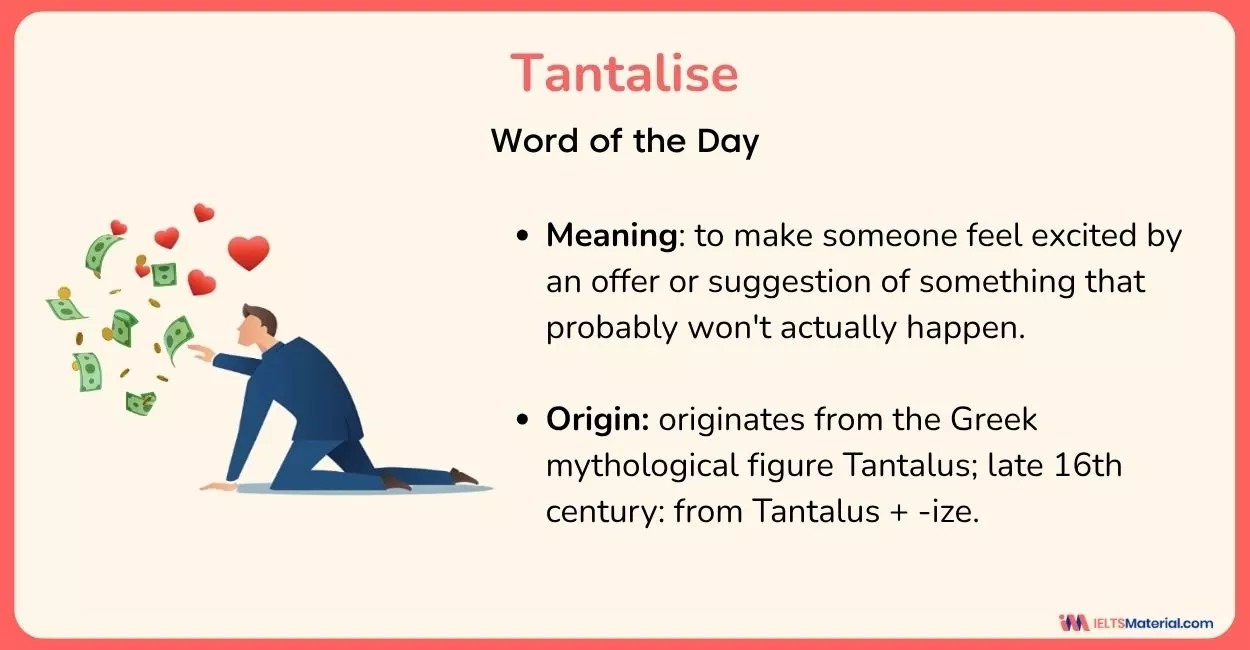
Tantalise: Word Meaning, Examples, Origin & Usage in IELTS
Tantalise is a word that simplifies describing the experience of being teased with something desirable that remains unattainable. In IELTS, this word helps candidates express subtle emotional and psychological situations with precision and sophistication. So, add the word to your IELTS Vocabulary words list for band 8 or 9, and boost your lexical resources. In this blog, we will thoroughly examine the word 'tantalise.' We will discuss its meaning, origin, history, synonyms, and antonyms, and provide clear guidance on its correct usage in IELTS to reinforce your understanding with practical exercises. Meaning of Tantalise Pronunciation: /ˈtantəlʌɪz/(sounds like TAN-tuh-lyze) According to the Oxford...

5 min read
Updated On
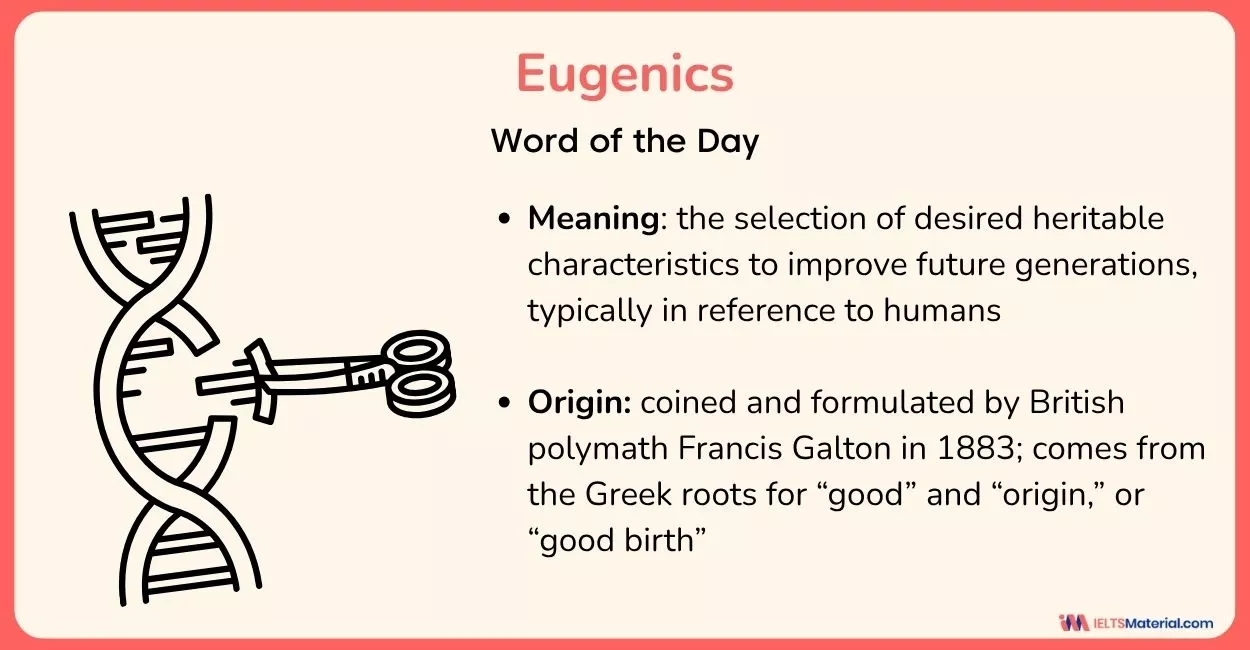
Eugenics: Word Meaning, Examples, Origin & Usage in IELTS
Few words in the English language carry as much historical weight and ethical sensitivity as eugenics. It is not merely a scientific term but one deeply connected to debates about human rights, equality, and morality. In this blog, we explore the meaning and origins of 'eugenics,' alongside guidelines for its correct use. It contains practical exercises designed to reinforce what you've learned. By adding this word to your IELTS Vocabulary words list for Band 8 or 9, you can improve your chances of achieving your desired score. Meaning of Eugenics Pronunciation: /juːˈdʒenɪks/ (sounds like yoo·jeh·nuhks) The study of or belief in...
5 min read
Updated On
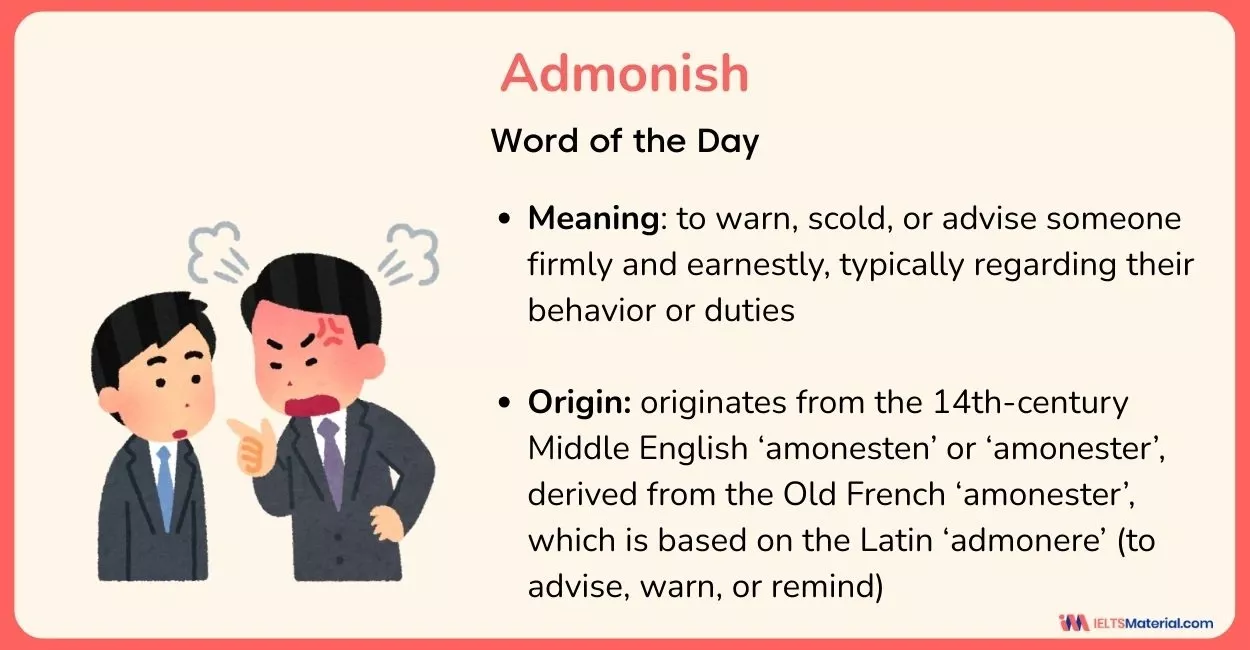
Admonish: Word Meaning, Examples, Origin & Usage in IELTS
Today’s word of the day, ‘admonish’ reflects more than just actions; it reflects actions and attitudes. In other words, it conveys the idea of correcting or warning someone in a firm yet constructive manner. Therefore, adding it to your IELTS vocabulary helps when discussing education, parenting, leadership, and social behaviour, where guidance and discipline are important. This blog post will, therefore, check the definition, historical context, and proper usage of the word 'admonish’, one of the IELTS Academic high-frequency vocabulary words, particularly in the IELTS exam. You will also find a variety of useful exercises at the end to help you...
5 min read
Updated On
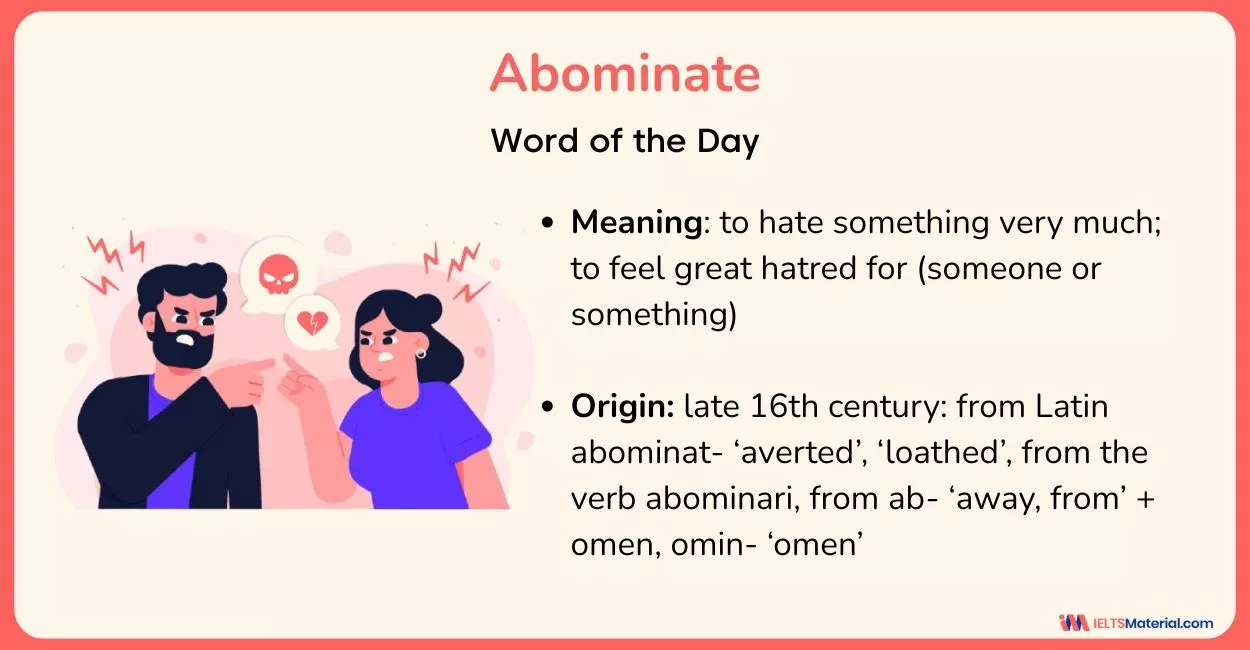
Abominate: Word Meaning, Examples, Origin & Usage in IELTS
Repeating words like ‘hate’ or ‘dislike’ in IELTS can reduce your lexical resource score. So, it is best to add words like ‘abominate’ to your IELTS Vocabulary words list for Band 8 or 9. The word captures a level of dislike that goes far beyond simple disagreement. In this blog post, we will examine the meaning, origin, history, synonyms, and antonyms of the word, as well as its proper usage of the term ‘abominate’ within the context of IELTS, reinforcing our understanding through practical exercises. Meaning of Abominate Pronunciation: /əˈbɒmɪneɪt/ (sounds like uh·baw·muh·nayt ) According to the Cambridge Dictionary, the word...
5 min read
Updated On
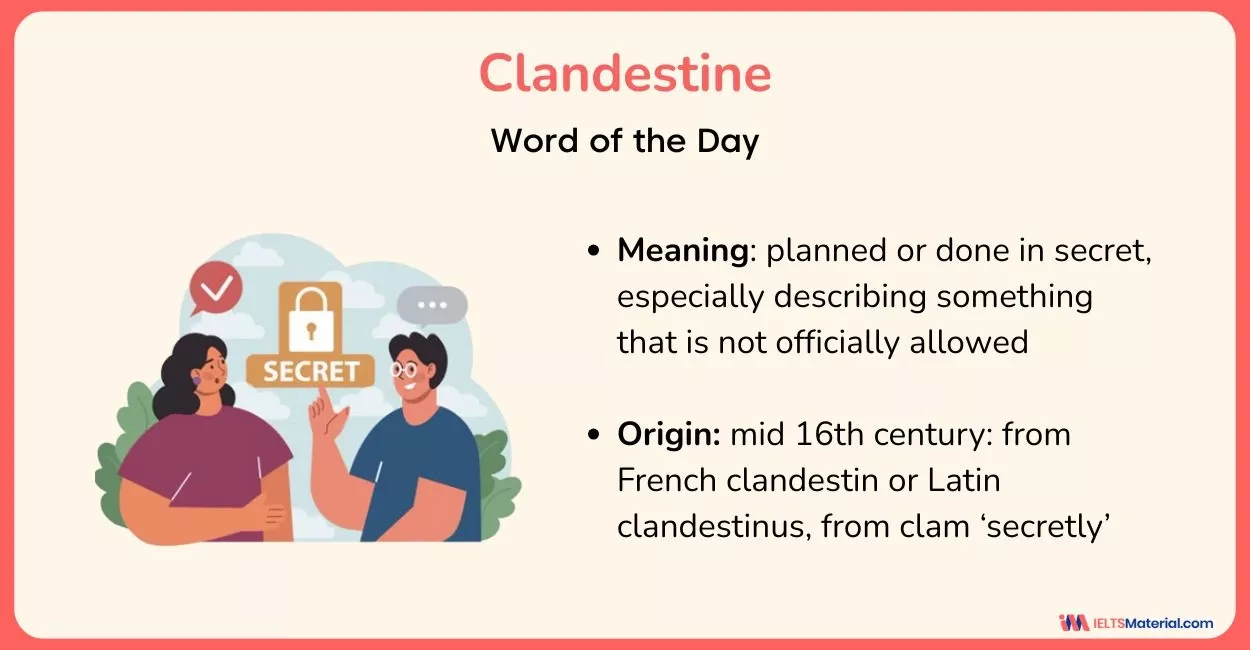
Clandestine: Word Meaning, Examples, Origin & Usage in IELTS
Some words immediately suggest mystery, secrecy, and concealed intentions. The word of the day, ‘clandestine’, is a powerful and common English word used in IELTS Speaking Test, and used to describe actions carried out quietly to avoid detection. As a result, this blog post will examine the definition, history, and proper usage of the word ‘clandestine’, particularly in relation to the IELTS exam. It will conclude by providing a number of useful exercises to help you better understand the concept. Meaning of Clandestine Pronunciation: /klænˈdɛstɪn/ (sounds like klan·deh·stn) While the Oxford Dictionary states that ‘clandestine’ means ‘done secretly, especially when illegal or...
5 min read
Updated On
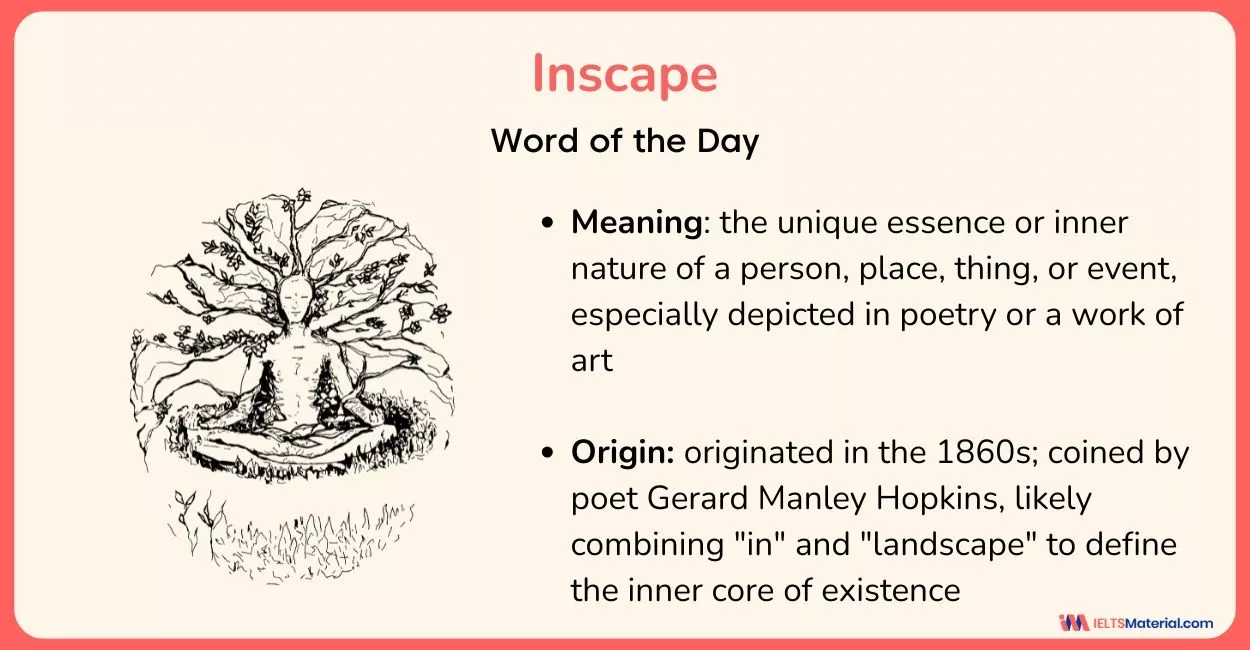
Inscape: Word Meaning, Examples, Origin & Usage in IELTS
Some words point outward to visible actions, while others quietly turn us inward. The word ‘inscape’ is one such rare and reflective word. It captures the inner essence of things, the unique pattern that exists beneath the surface. In IELTS, where abstract thinking and precise vocabulary matter, it helps candidates express depth, perception, and individuality with sophistication. So, understand the meaning, history, and proper usage of the term ‘inscape’. Solidify your knowledge through practical exercises and include it in your IELTS Vocabulary words list for Band 8 or 9 to reach your desired score. Meaning of Inscape Pronunciation: /ˈɪn.skeɪp/ (sounds like IN-skape) According...
5 min read
Updated On
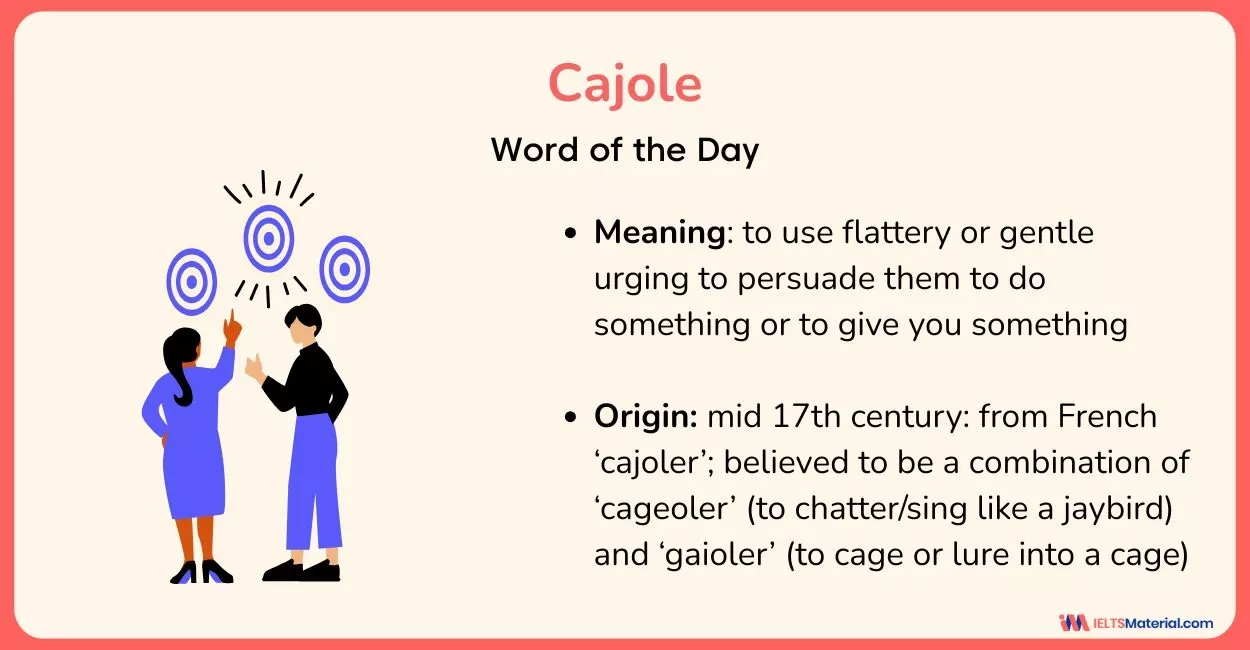
Cajole - Word of the Day for IELTS Speaking and Writing
Some situations require forceful arguments, while others demand subtle persuasion, and the word ‘cajole’ perfectly captures the latter. This word describes the skill of influencing someone through friendliness, encouragement, or gentle pressure rather than authority. In this blog, we will examine the meaning, origin, history, synonyms, and antonyms of the word 'cajole,' as well as its proper usage within the context of the IELTS exam. We will solidify our understanding through practical exercises. Meaning of Cajole Pronunciation: /kə-ˈjōl/ (sounds like kuh-JOHL) The meaning of the word ‘cajole’ is ‘to persuade someone to do something by talking to them in a friendly...
5 min read
Updated On
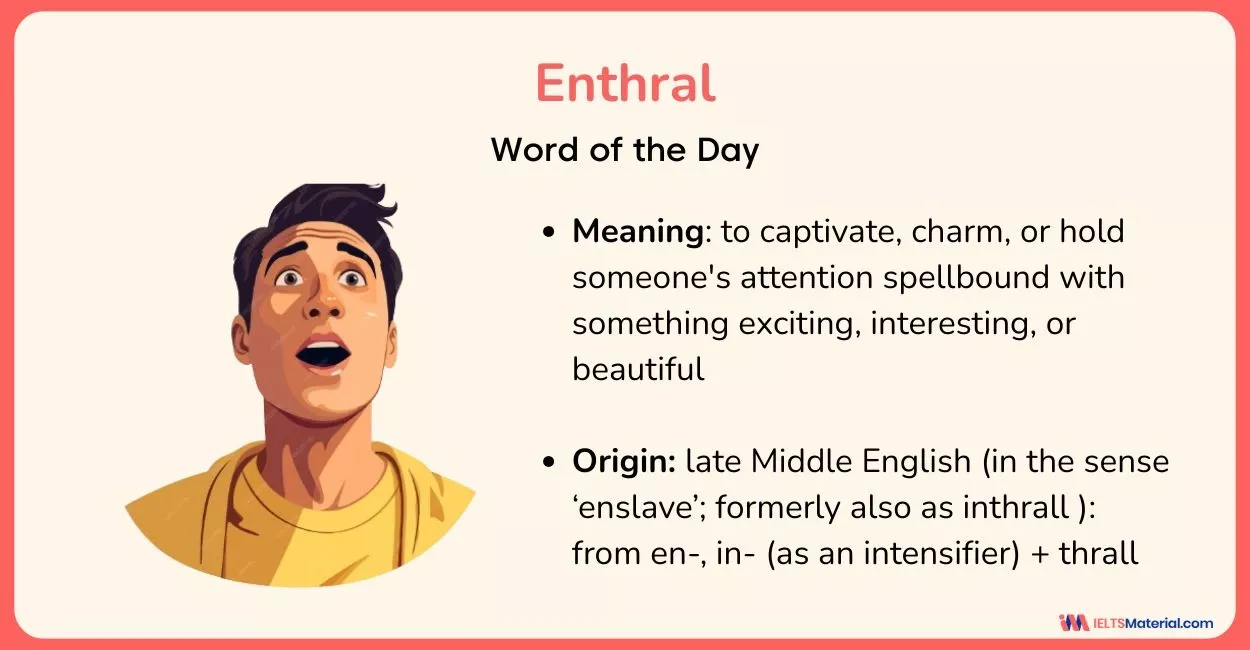
Enthral: Word Meaning, Examples, Origin & Usage in IELTS
Some experiences hold our attention so completely that distraction becomes impossible, and ‘enthral’ is the precise word that captures this state. Rather than simply saying something is ‘interesting’ or ‘exciting’, it conveys deep mental absorption and emotional engagement. So, add the word to your IELTS Vocabulary words list for band 8 or 9, and boost your lexical resources. In this blog, we will thoroughly examine the word 'entral.' We will discuss its meaning, origin, history, synonyms, and antonyms, and provide clear guidance on its correct usage in IELTS to reinforce your understanding with practical exercises. Meaning of Enthral Pronunciation: /ɪnˈθrɔːl/ (sounds like...
5 min read
Updated On
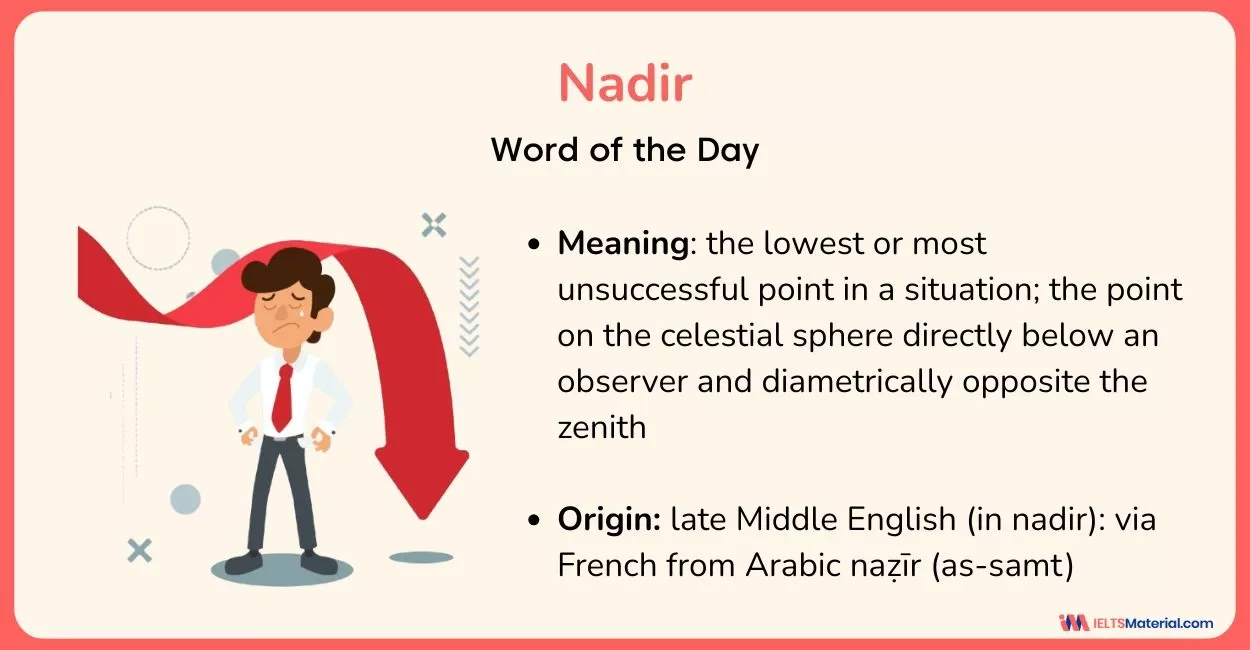
Nadir - Word of the Day for IELTS Speaking and Writing
Some words capture emotional depth with remarkable precision, and the word ‘nadir’ is one such term. Rather than simply saying ‘the worst time’, it allows speakers and writers to convey decline, failure, or extreme difficulty with academic clarity. As a result, learning the correct use of the word is essential to boost your vocabulary. This blog explains the meaning and history of the term ‘nadir’, as well as its proper usage. It includes practical exercises to reinforce your understanding. By adding this word to your IELTS Vocabulary words list for Band 8 or 9, you can improve your chances of achieving...
5 min read
Updated On
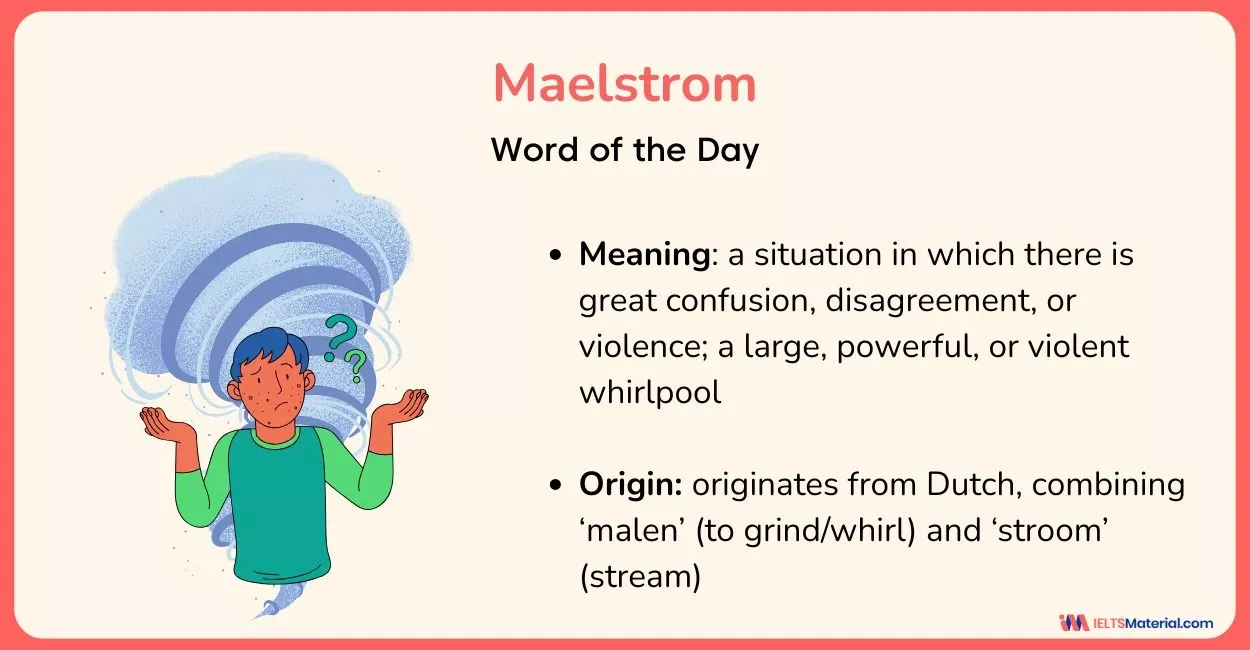
Maelstrom: Word Meaning, Examples, Origin & Usage in IELTS
Some words instantly create vivid mental images, and ‘maelstrom’ is one of them. It evokes the idea of being pulled into something powerful, uncontrollable, and chaotic, whether literal or emotional. As a result, it is one of those essential words that you should add to the advanced vocabulary word list for IELTS. In this blog post, we will examine the meaning, origin, history, synonyms, and antonyms of the word, as well as its proper usage of the term ‘maelstrom’ within the context of IELTS, reinforcing our understanding through practical exercises. Meaning of Maelstrom Pronunciation: ˈmeɪlstrəʊm (sounds like mayl·strome) ‘Maelstrom’ refers to a...
5 min read
Updated On
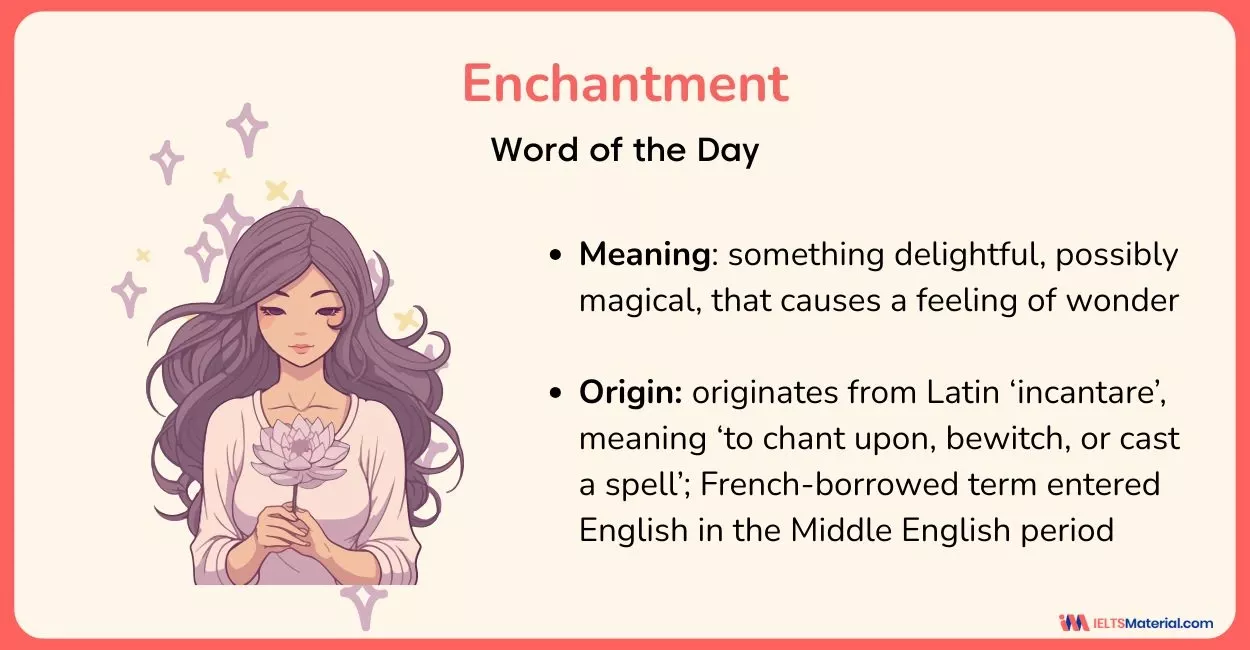
Enchantment: Word Meaning, Examples, Origin & Usage in IELTS
The word ‘enchantment’ carries a rare blend of magic, mystery, and emotional depth. It is one of those words that instantly transforms ordinary language into vivid imagery. As a result, having a strong grasp of this particular word will significantly improve your IELTS vocabulary, ultimately leading to a more persuasive and effective communication style. In this blog post, we will explore the meaning, origin, history, synonyms and antonyms of the word and proper usage of the term ‘enchantment’ within the context of IELTS, solidifying our understanding through practical exercises. Meaning of Enchantment Pronunciation: /ɪnˈtʃɑːntmənt/ (sounds like uhn·chaant·muhnt) The word ‘enchantment’ means...
5 min read
Updated On
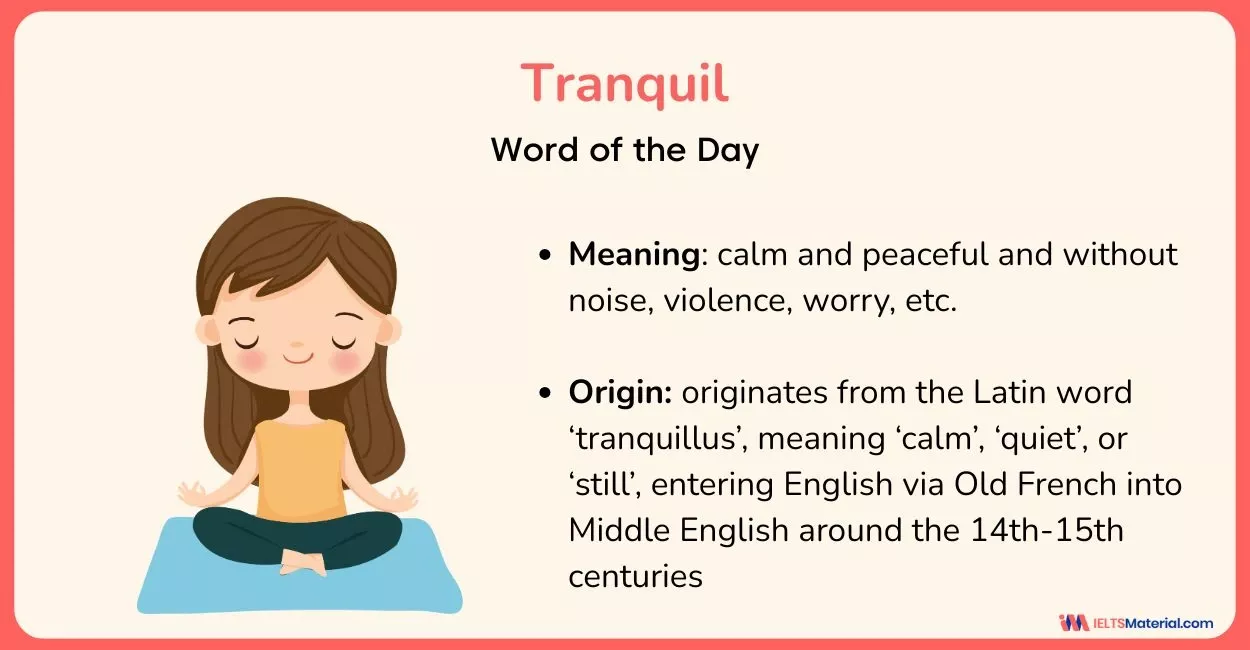
Tranquil: Word Meaning, Examples, Origin & Usage in IELTS
The word ‘tranquil’ evokes calmness, stillness, and a sense of peace that many of us crave in our fast-moving world. As a result, if you are preparing for IELTS, it is a high-value vocabulary item and adding it to your IELTS Vocabulary Words List for Band 8 or 9 will bring emotional depth and clarity to your speaking and writing responses. In this blog post, we will examine the meaning, origin, history, synonyms, and antonyms of the word, as well as its proper usage of the term ‘tranquil’ within the context of IELTS, reinforcing our understanding through practical exercises. Meaning of Tranquil...
6 min read
Updated On
Astounding: Word Meaning, Examples, Origin & Usage in IELTS
Some English words carry impact, surprise, and intensity, and ‘astounding’ is one of them. It is a word that instantly transforms ordinary descriptions into vivid, memorable statements. So, adding it to your IELTS vocabulary words list for Band 8 or 9 is essential as it is perfect for describing a shocking event, an unbelievable statistic, or a remarkable achievement. Therefore, this blog post will explore the meaning, origins, historical context, and correct application of the word ‘astounding’, specifically for the IELTS exam, finally, strengthening your understanding through a series of practical exercises. Meaning of Astounding Pronunciation: /əˈstaʊndɪŋ/ (sounds like uh·stawnd·uhng) The adjective ‘astounding’ describes...
5 min read
Updated On
Protectorate: Word Meaning, Examples, Origin & Usage in IELTS
Few words carry the political depth and historical weight that ‘protectorate’ does. At first glance, it may seem like an old geopolitical term, but it is still used today to describe relationships of authority, control, and partial independence. This blog provides the meaning, history, and proper usage of the term ‘intractable’, solidifies your understanding through practical exercises, and adding it to your IELTS Vocabulary words list for Band 8 or 9 will help you achieve your desired score. Meaning of Protectorate Pronunciation: /prəˈtektərət/ (sounds like pruh·tek·tuh·ruht) A protectorate is a territory that maintains internal governance but is controlled or defended by another,...
5 min read
Updated On
Wingspan: Word Meaning, Examples, Origin & Usage in IELTS
‘Wingspan’ is one of those words that begins with a literal meaning but evolves into powerful metaphors. Originally used to describe the distance from the tip of one wing to the other in birds and aircraft, the word now extends to concepts like capability, influence, and potential reach. So, learning how to use it correctly and powerfully is essential to boost your lexical resource as well as your band score. In this blog post, we will explore the meaning, origin, history, synonyms and antonyms of the word and proper usage of the term ‘wingspan’ within the context of IELTS. It also provides...
6 min read
Updated On
Endurance: Word Meaning, Examples, Origin & Usage in IELTS
While some words carry the power of action, others carry the power of persistence. Today’s word of the day, ‘endurance’, belongs to the second category. It represents the mental and physical strength needed to push forward when circumstances test our resilience, whether in academics, sports, personal life, or societal growth, making it one of the essential words to add to the advanced vocabulary word list for IELTS. In this blog post, we will examine the meaning, origin, history, synonyms, and antonyms of the word, as well as its proper usage of the term ‘endurance’ within the context of IELTS, reinforcing our understanding...
6 min read
Updated On
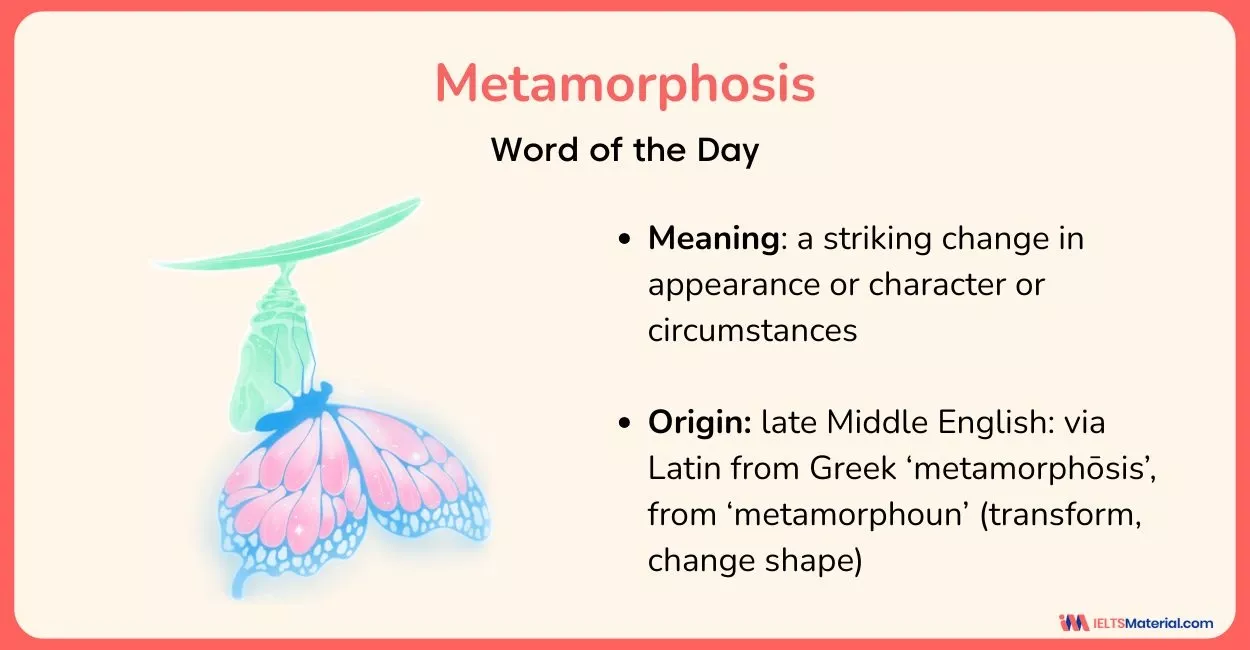
Metamorphosis: Word Meaning, Examples, Origin & Usage in IELTS
Unlike ordinary words for ‘change’, today’s word of the day, ‘metamorphosis’, evokes transformation so profound that the result is almost unrecognizable from the starting point. Whether in biology, literature, or personal growth, the word represents a deep and meaningful evolution. As a result, learning this word and how to use it in IELTS contexts can be very useful for exam preparation. In this blog post, we will explore the meaning, origin, history, and proper usage of the term ‘metamorphosis’ within the context of the IELTS exam, solidifying our understanding through practical exercises. Meaning of 'Metamorphosis' Pronunciation: /ˌmetəˈmɔːrfəsɪs/ (sounds like meh·tuh·maw·fuh·suhs) ‘Metamorphosis’...
6 min read
Updated On
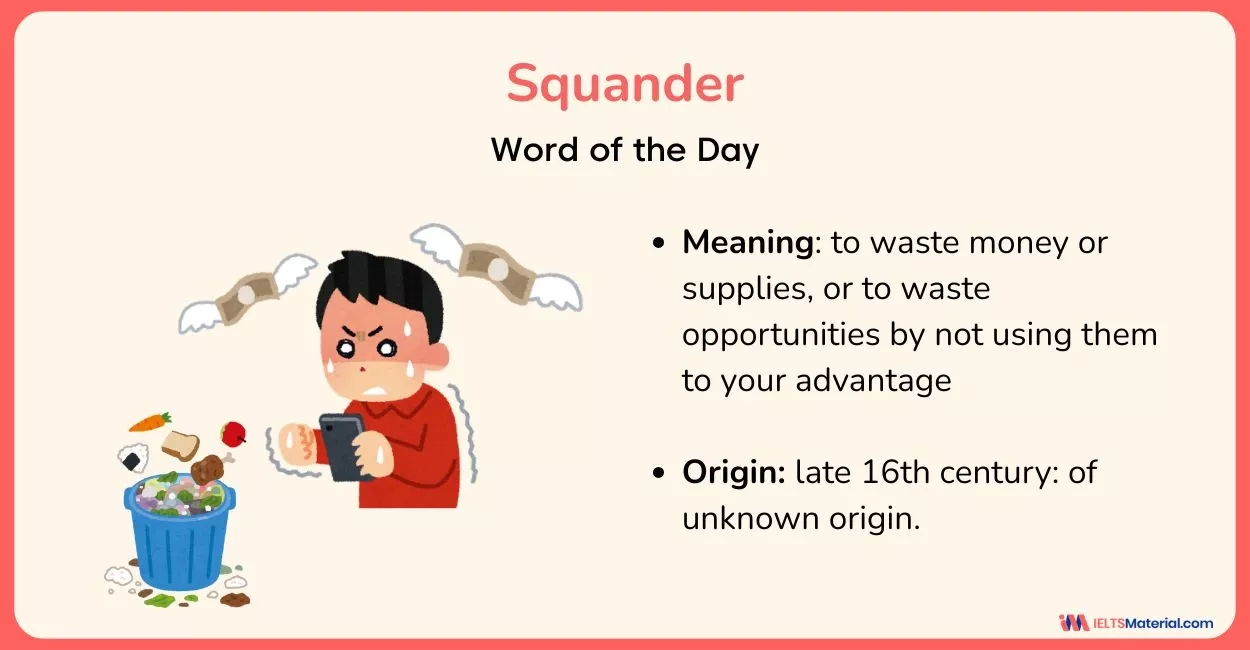
Squander: Word Meaning, Examples, Origin & Usage in IELTS
Some people save every coin, while others spend without a second thought. The word ‘squander’ perfectly captures the idea of wasting money, opportunities, or time. Using the word in your writing or speaking allows you to show emotional clarity, judgment, and analytical thinking, essential skills for a high IELTS band score. So, in this blog, we will discuss the meaning, history, and proper usage of the term ‘squander’, check your understanding through practical exercises, and add it to your IELTS Vocabulary words list for Band 8 or 9 to achieve your desired score. Meaning of Squander Pronunciation: /skwɑːndər/ (sounds like skvawn·duh) The verb ‘squander’...
5 min read
Updated On
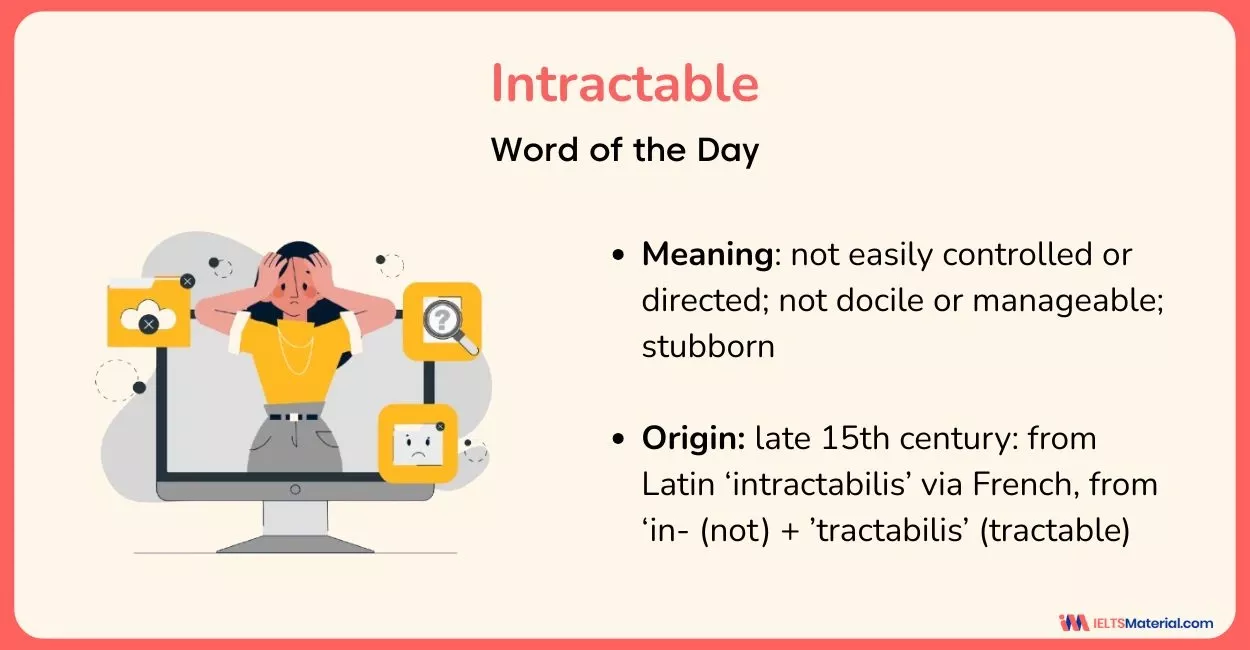
Intractable: Word Meaning, Examples, Origin & Usage in IELTS
Some problems in life can be solved with compromise, negotiation, or patience, but others refuse to bend. The word of the day, ‘intractable,’ is reserved for those challenges, issues, or individuals that are exceptionally difficult to deal with, control, or resolve. As a result, learning the correct use of the word is essential to boost your vocabulary. This blog provides the meaning, history, and proper usage of the term ‘intractable’, solidifies your understanding through practical exercises, and adding it to your IELTS Vocabulary words list for Band 8 or 9 will help you achieve your desired score. Meaning of Intractable Pronunciation: /ɪnˈtræktəbəl/...
5 min read
Updated On

Reaffirm: Word Meaning, Examples, Origin & Usage in IELTS
In a world where commitments, beliefs, and decisions are constantly challenged, the word ‘reaffirm’ carries great significance. It refers to expressing support, confidence, or belief once again, especially after doubt, change, or pressure. Since it can be used in both informal and formal contexts in IELTS, it is important to learn its correct usage. In this blog, we are going to look at the meaning, the history, the synonyms, and the antonyms of the word 'reaffirm'. Additionally, we will also be looking at how to use it in the IELTS exam, and we will be doing some exercises to help us...
5 min read
Updated On