The Risks Agriculture Faces In Developing Countries - IELTS Reading Answers
5 min read
Updated On
-
Copy link
Explore the IELTS Academic Reading passage “The Risks Agriculture Faces in Developing Countries” with detailed solutions, easy-to-follow explanations, and expert strategies. Enhance and tackle all question formats, and achieve a higher band score.
Table of Contents


Limited-Time Offer : Access a FREE 10-Day IELTS Study Plan!
The Academic Reading passage “The Risks Agriculture Faces In Developing Countries” is taken from a real IELTS examination. With focused practice, the Reading Module can become your highest-scoring section. To achieve a strong band score, it is essential to understand how to approach each question type effectively. By solving and reviewing Sample Reading Questions from past IELTS papers, you can ensure that your Reading skills are up to the mark. Take the practice test, "The Risks Agriculture Faces In Developing Countries," below and try more IELTS reading practice tests from IELTSMaterial.com.
The Risks Agriculture Faces In Developing Countries IELTS Reading Passage
You should spend about 20 minutes on Questions 1-13, which are based on the Reading Passage below.
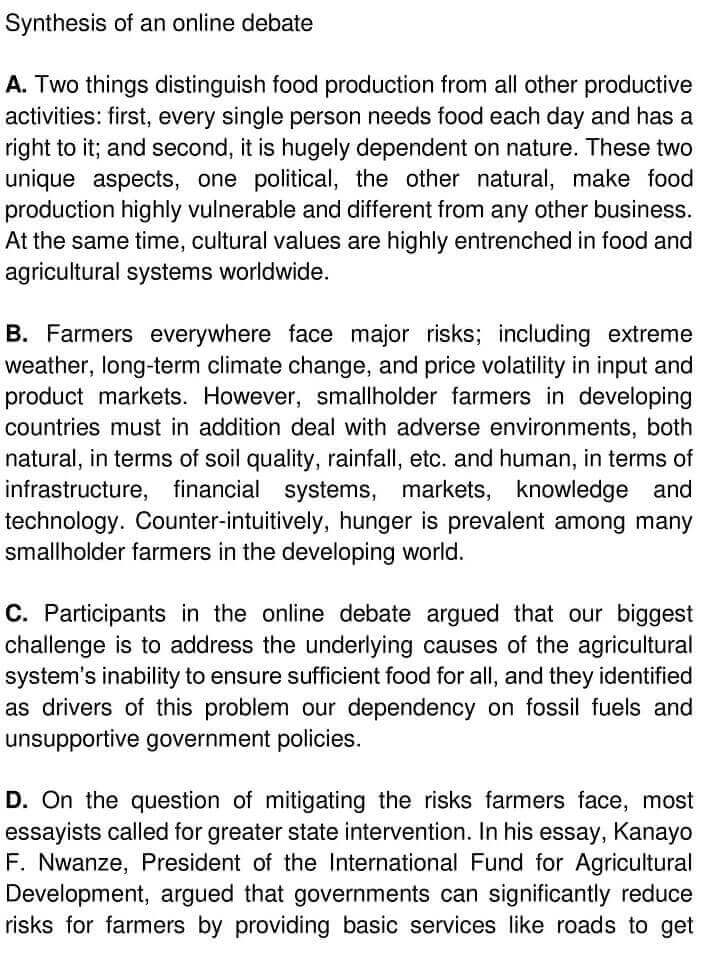
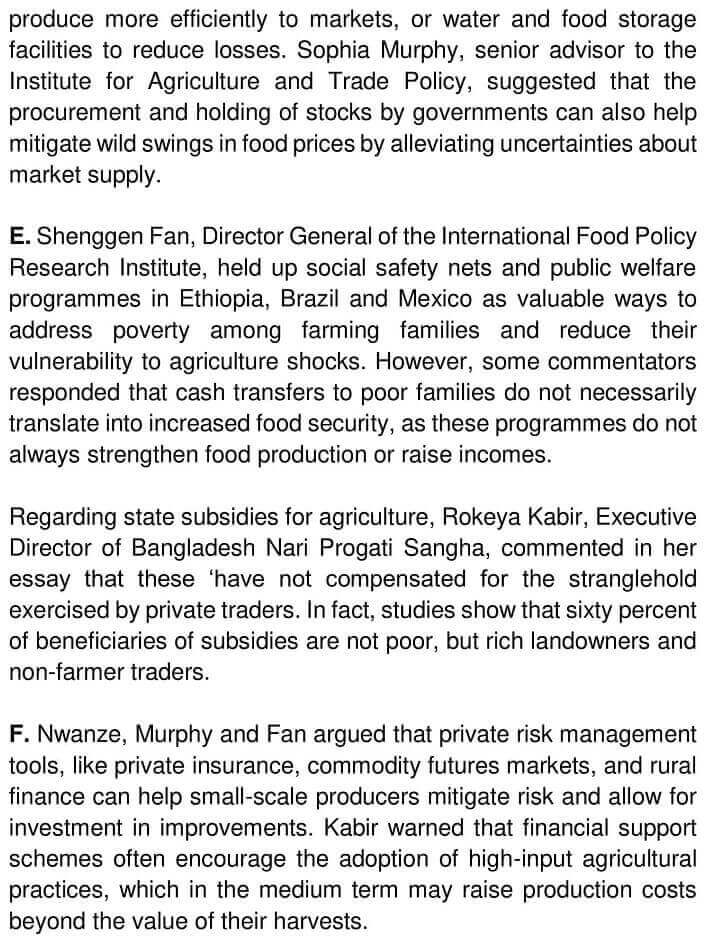
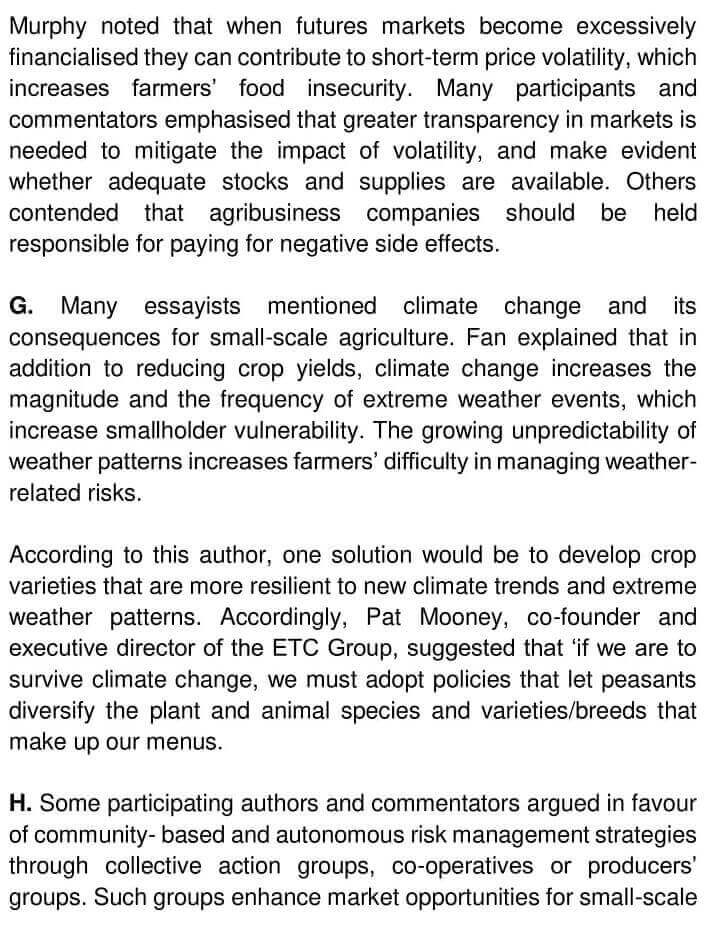
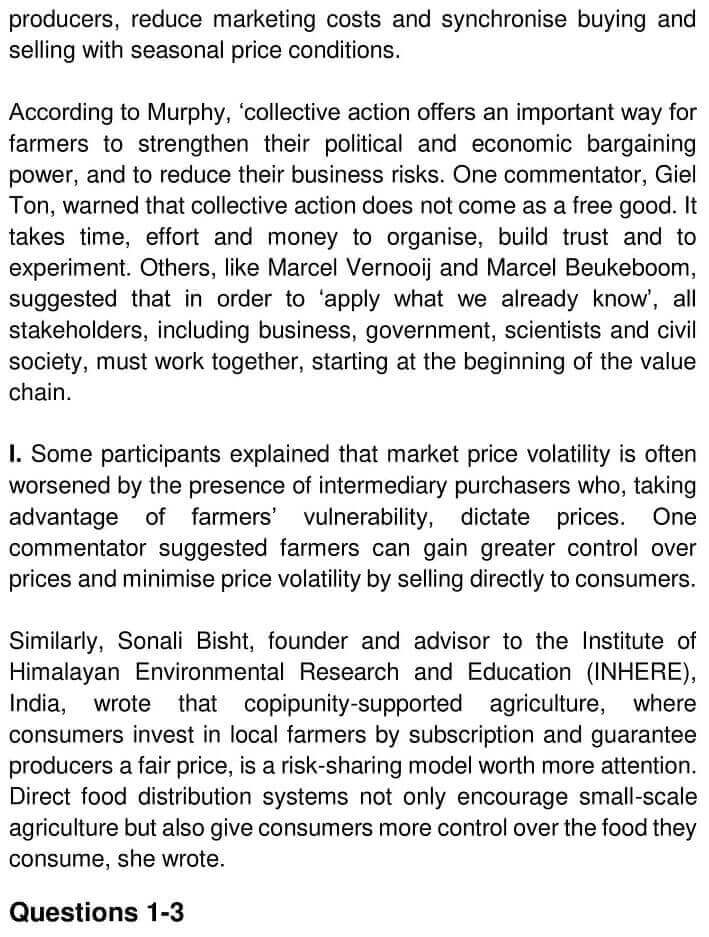
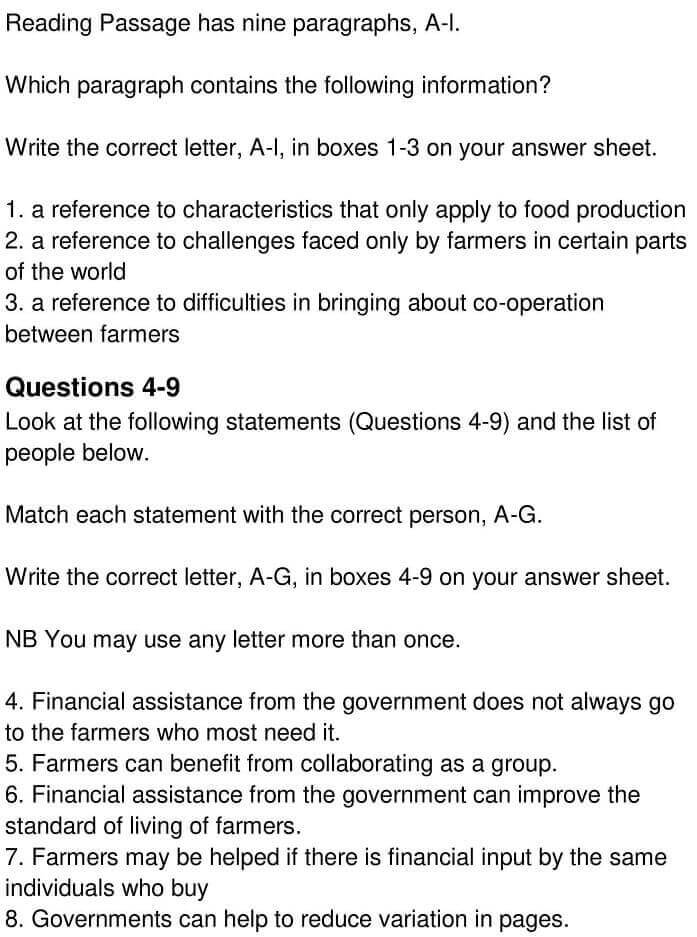
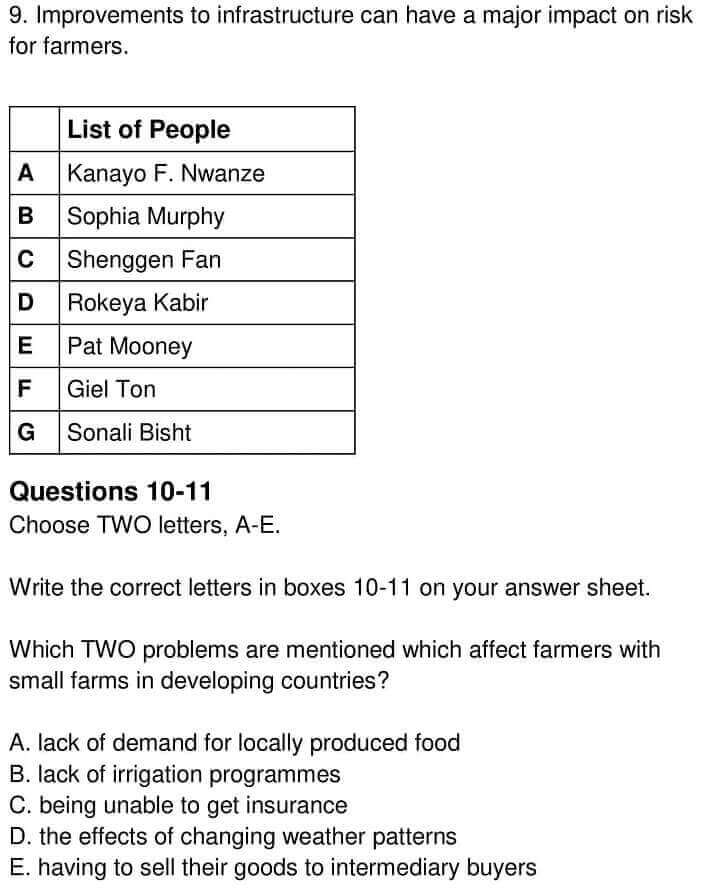
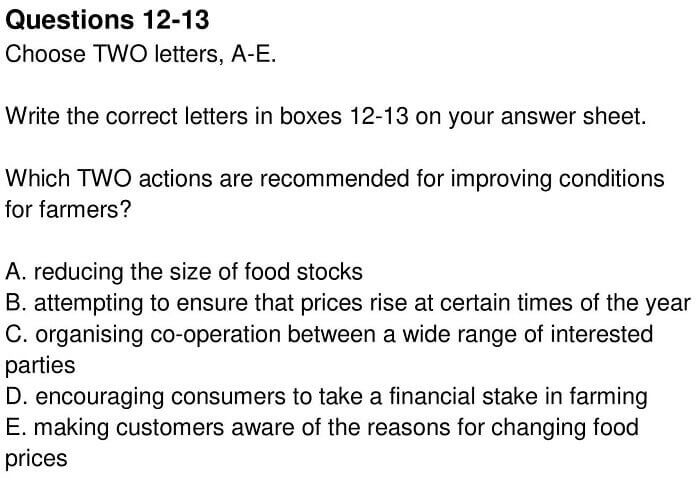
Boost your IELTS Academic Reading score today! Grab Get Your IELTS Reading Ebook Now!
The Risks Agriculture Faces In Developing Countries IELTS Reading Answers
Let’s now review the answers to the questions from the passage in the reading section, The Risks Agriculture Faces In Developing Countries - IELTS Reading Answers, and assess your improvement for a high IELTS Reading band score.
| Question number | Answer | Keywords | Location of keywords |
|---|---|---|---|
| 1 | A | Two things distinguish food production from all other productive activities: first, every single person needs food each day and has a right to it; and second, it is hugely dependent on nature. | Paragraph A;
Line 1 |
| 2 | B | smallholder farmers in developing countries must in addition deal with adverse environments | Paragraph B;
Line 2 |
| 3 | H | It takes time, effort and money to organise, build trust and to experiment | Paragraph H;
Line 5 |
| 4 | D | In fact, studies show that sixty percent of beneficiaries of subsidies are not poor, but rich landowners and non-farmer traders. | Paragraph E;
Line 4 |
| 5 | B | According to Murphy, ‘collective action offers an important way for farmers to strengthen their political and economic bargaining power, | Paragraph H;
Line 3 |
| 6 | C | Shenggen Fan, Director General of the International Food Policy Research Institute, held up social safety nets and public welfare programmes in Ethiopia, Brazil and Mexico as valuable ways to address poverty among farming families and reduce their vulnerability to agriculture shocks | Paragraph E;
Line 1 |
| 7 | G | copipunity-supported agriculture, where consumers invest in local farmers by subscription and guarantee producers a fair price, | Paragraph I;
Line 3 |
| 8 | B | the procurement and holding of stocks by governments can also help mitigate wild swings in food prices by alleviating uncertainties about market supply. | Paragraph D;
Line 3 |
| 9 | A | governments can significantly reduce risks for farmers by providing basic services like roads to get produce more efficiently to markets, or water and food storage facilities to reduce losses | Paragraph D;
Line 2 |
| 10 | D | climate change and its consequences for small-scale agriculture | Paragraph G;
Line 1 |
| 11 | E | the presence of intermediary purchasers who, taking advantage of farmers’ vulnerability, dictate prices | Paragraph I;
Line 1 |
| 12 | C | all stakeholders, including business, government, scientists and civil society, must work together, starting at the beginning of the value chain. | Paragraph H;
Last line |
| 13 | D | community-supported agriculture, where consumers invest in local farmers by subscription and guarantee producers a fair price, | Paragraph I;
Line 3 |
Tips to Ace The Risks Agriculture Faces In Developing Countries - IELTS Reading Answers
Let us check out some quick IELTS Exam Preparation Tips for Band Score of 8+ to answer the types of questions in the Reading Answers.
Matching Paragraphs
- Understand the main idea of each paragraph – Skim the first and last sentences to capture the topic.
- Look for keywords – Identify unique terms, names, or dates that relate to the question statements.
- Eliminate irrelevant paragraphs – Narrow down options before choosing to save time.
- Pay attention to synonyms – Questions may paraphrase ideas from the passage.
- Avoid overthinking – Focus on the main idea, not minor details.
Matching Features
- Underline the feature names first
Identify people, organizations, places, or years clearly. - Scan vertically, not line by line
Move your eyes quickly to spot where each feature is discussed. - Track opinions or actions
These questions often test who said/did/believed what. - Beware of similar viewpoints
Two features may sound alike—check small differences carefully. - Reuse is allowed
A feature can be matched more than once unless stated otherwise.
Multiple Choice Questions (MCQ)
- Answer in your own words first
Predict the answer before looking at the options. - Eliminate wrong options aggressively
Remove choices that are too extreme, irrelevant, or partially correct. - Check for paraphrasing traps
Correct answers use different wording but same meaning as the text. - Match the question focus exactly
Don’t choose an option just because it appears in the passage. - Read beyond the keyword
The answer may be before or after the line where the keyword appears.
Want to boost your IELTS score? Enroll in our expert-led IELTS online classes today!
In conclusion, the IELTS Reading passage “The Risks Agriculture Faces In Developing Countries - IELTS Reading Answers” allows candidates to practise a range of question types while improving comprehension and information-identifying skills. With complete answers, keyword locations, and explanations, this article helps learners understand the passage more effectively, enhance accuracy, and boost their overall IELTS Reading score. Keep practising with more IELTS Reading Recent Actual Tests and answers on IELTSMaterial.com to improve your speed, accuracy, and overall performance.
Check More IELTS Reading Answers
Practice IELTS Reading based on question types

Start Preparing for IELTS: Get Your 10-Day Study Plan Today!

Recent Articles
Nehasri Ravishenbagam
Haniya Yashfeen
Haniya Yashfeen
Haniya Yashfeen


Post your Comments