The Problem Of Scarce Resources - IELTS Reading Answers
6 min read
Updated On
-
Copy link
Boost your IELTS Reading preparation with The Problem of Scarce Resources passage. Access detailed answers, explanations, and strategies to improve comprehension, accuracy, and confidence in solving different question types.
Table of Contents


Limited-Time Offer : Access a FREE 10-Day IELTS Study Plan!
The Problem of Scarce Resources” IELTS Academic Reading passage is an excellent practice resource for candidates preparing for the IELTS Reading test. It helps learners understand the type of passages they may encounter in the exam and the level of complexity involved. By attempting The Problem of Scarce Resources IELTS Reading Answers, candidates can develop essential skills such as skimming, scanning, and identifying key information. This passage typically includes a variety of question types like Multiple Choice Questions, Matching Information, and True/False/Not Given, enabling test-takers to practise different strategies needed to perform effectively in the IELTS Reading section.
Since questions get repeated in the IELTS exam, these passages for ideal for practice. If you want more practice, try taking an IELTS reading practice test.
The Problem Of Scarce Resources IELTS Reading Passage
You should spend about 20 minutes on Questions 1-13, which are based on the Reading Passage below.
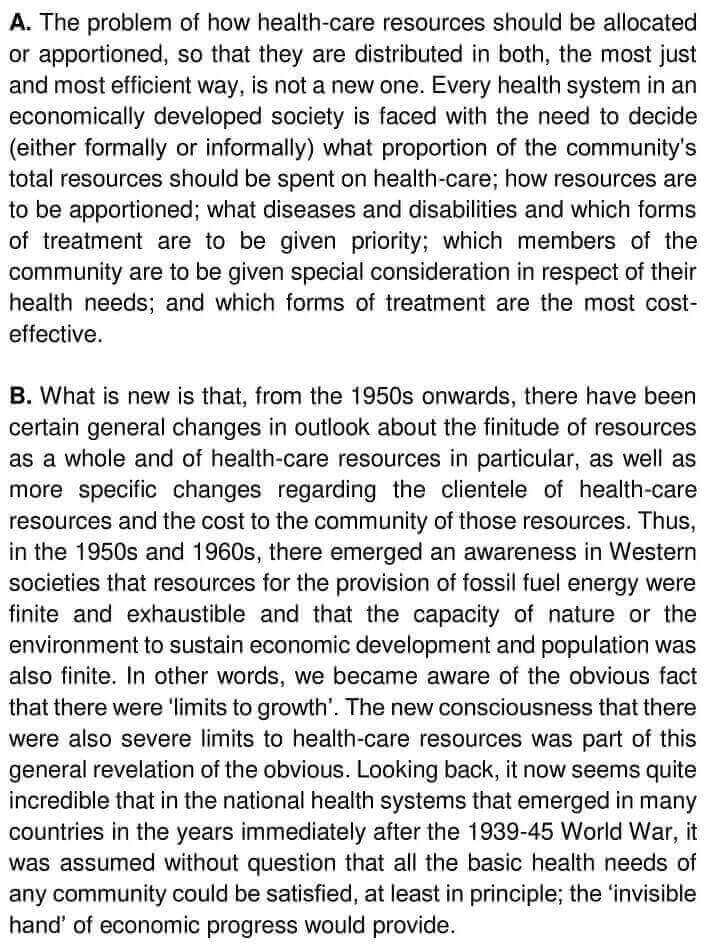
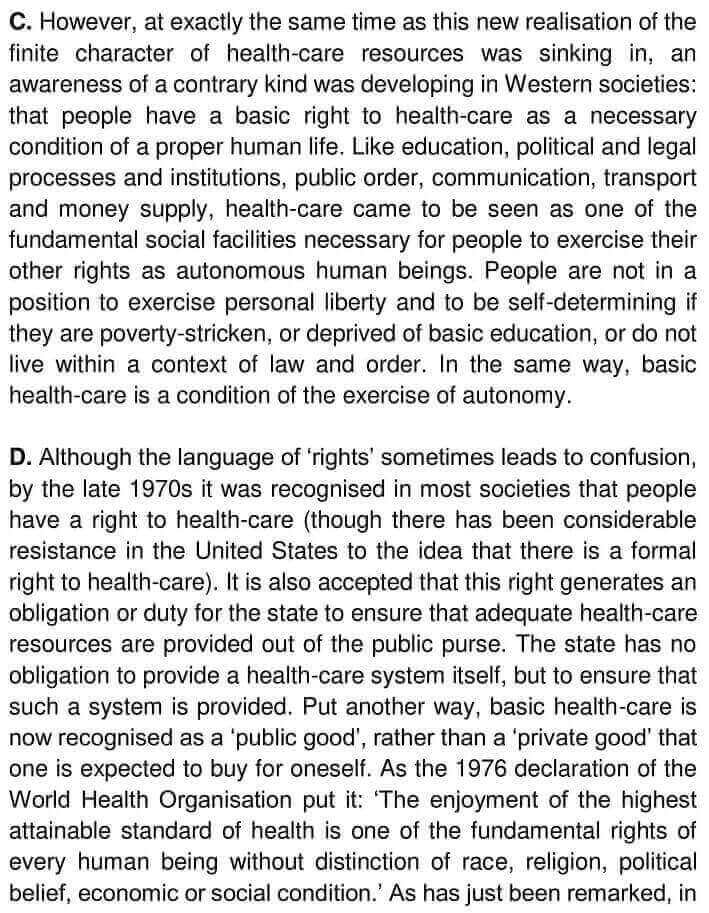
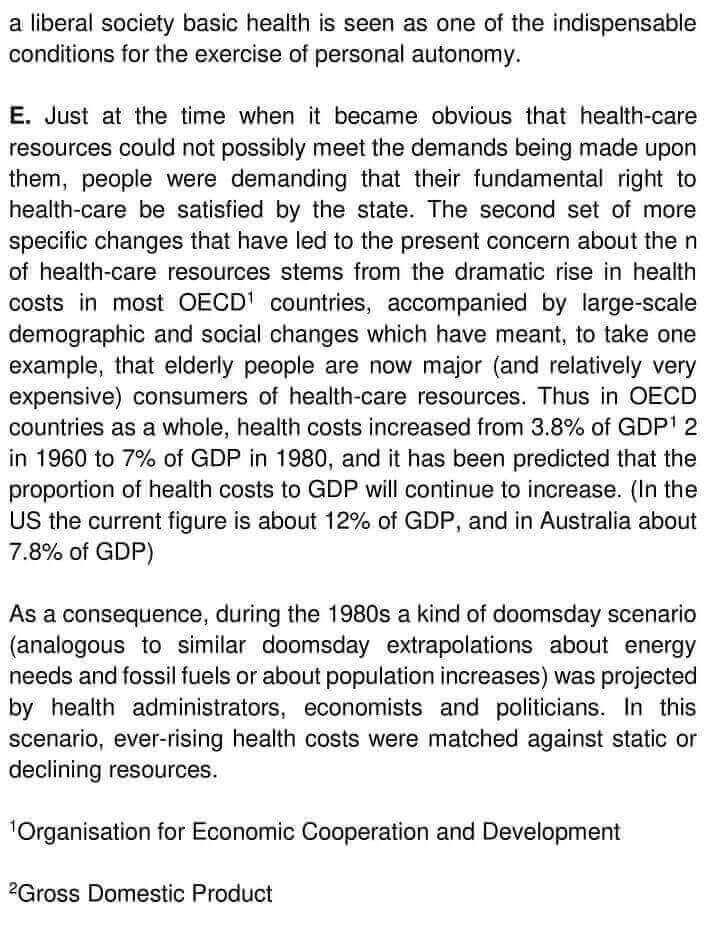
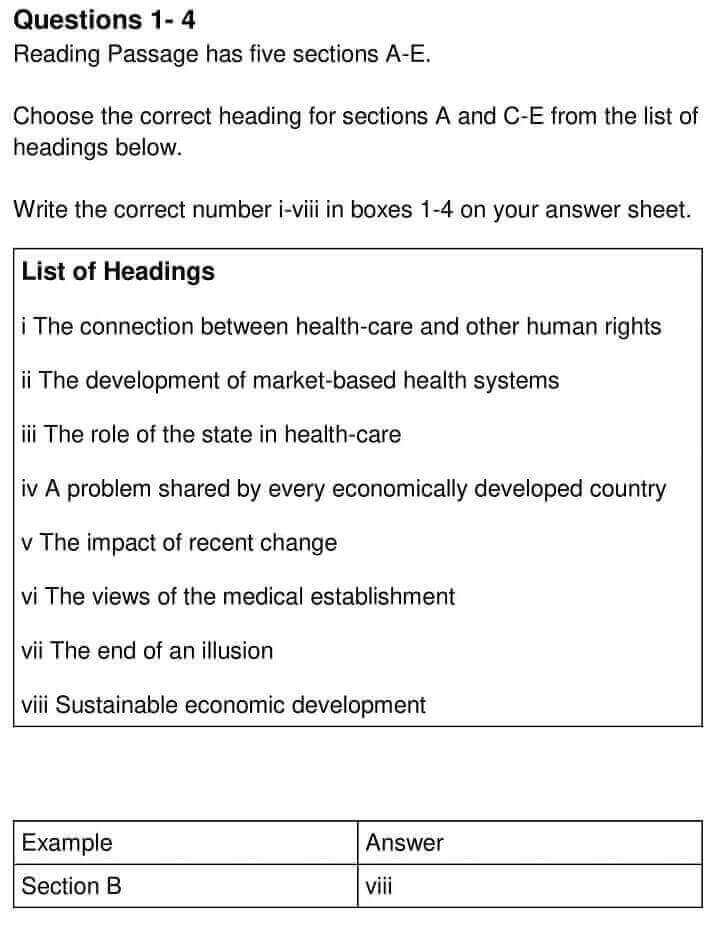
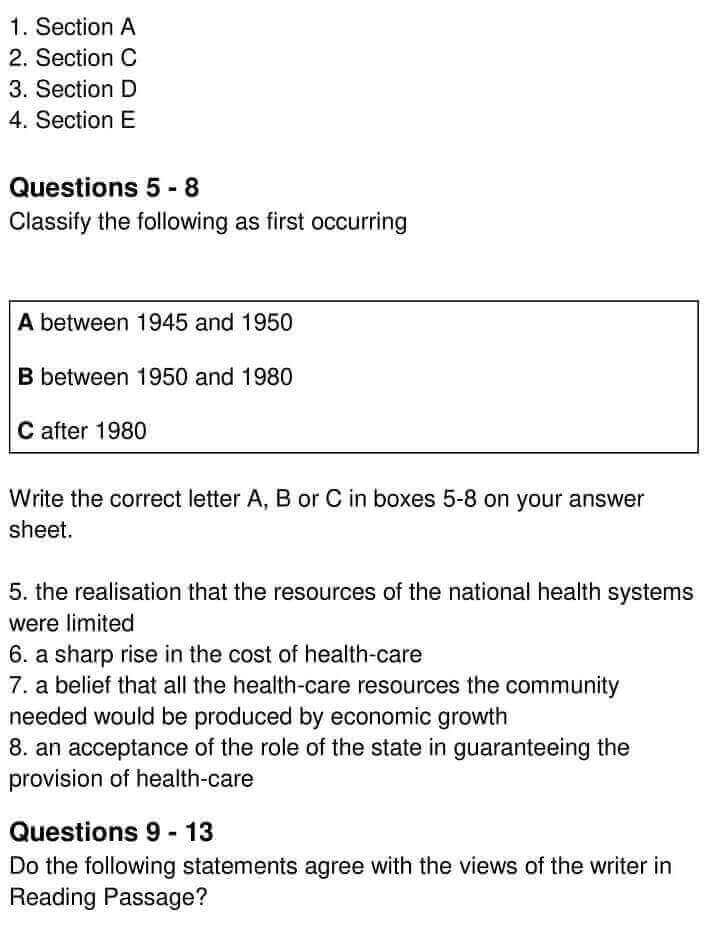
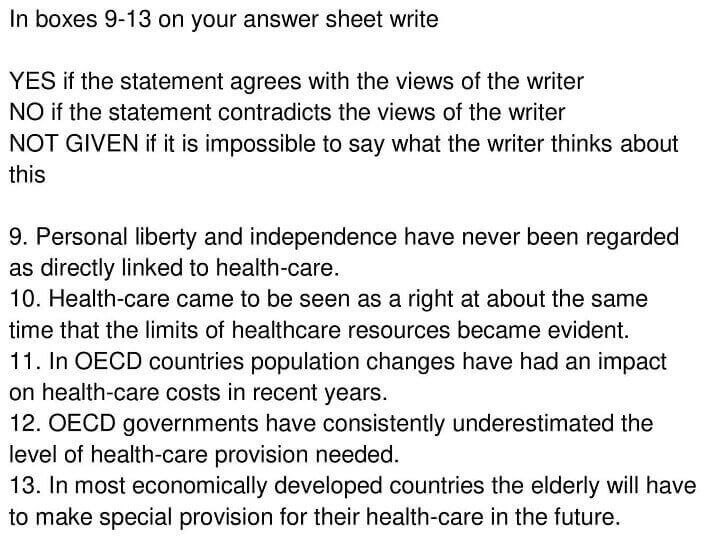
Master Academic Reading with our IELTS Reading guide for high scores on passages like ‘Indoor Pollution Reading Answers’!
The Problem Of Scarce Resources IELTS Reading Answers
Don’t miss the answer key for the The Problem Of Scarce Resources - IELTS Reading Answers passage, complete with detailed explanations, and prepare to score a high IELTS Reading band score.
| Question number | Answer | Keywords | Location of keywords |
|---|---|---|---|
| 1 | iv | Every health system in an economically developed society is faced with the need to decide (either formally or informally) | Paragraph A;
Line 2 |
| 2 | i | that people have a basic right to health-care as a necessary condition of a proper human life. | Paragraph C;
Line 1 |
| 3 | iii | The state has no obligation to provide a health-care system itself, but to ensure that such a system is provided. | Paragraph D;
Line 3 |
| 4 | v | The second set of more specific changes that have led to the present concern about the n of health-care resources stems from the dramatic rise in health costs in most OECD1 countries | Paragraph E;
Line 2 |
| 5 | B | Just at the time when it became obvious that health-care resources could not possibly meet the demands being made upon them, | Paragraph E;
Line 1 |
| 6 | B | Thus in OECD countries as a whole, health costs increased from 3.8% of GDP1 2 in 1960 to 7% of GDP in 1980 | Paragraph E;
Line 3 |
| 7 | A | after the 1939-45 World War, it was assumed without question that all the basic health needs of any community could be satisfied, at least in principle; the ‘invisible hand’ of economic progress would provide. | Paragraph B;
Last line |
| 8 | B | It is also accepted that this right generates an obligation or duty for the state to ensure that adequate health-care resources are provided out of the public purse. | Paragraph D;
Line 2 |
| 9 | NO | People are not in a position to exercise personal liberty and to be self-determining if they are poverty-stricken, or deprived of basic education, or do not live within a context of law and order. | Paragraph C;
Line 3 |
| 10 | YES | Just at the time when it became obvious that health-care resources could not possibly meet the demands being made upon them, people were demanding that their fundamental right to health-care be satisfied by the state. | Paragraph E;
Line 1 |
| 11 | YES | The second set of more specific changes that have led to the present concern about the n of health-care resources stems from the dramatic rise in health costs in most OECD1 countries, accompanied by large-scale demographic and social changes | Paragraph E;
Line 2 |
| 12 | NOT GIVEN | – | – |
| 13 | NOT GIVEN | – | – |
Tips to Ace The Problem Of Scarce Resources - IELTS Reading Answers
Let us check out some quick IELTS Exam Preparation Tips for Band Score of 8+ to answer the types of questions in the Reading Answers.
Matching Headings
- Focus on the main idea: Read the first and last sentences of each paragraph to quickly identify the overall theme.
- Ignore details at first: Don’t get distracted by names, dates, or examples—look for the central message.
- Paraphrasing is key: Headings rarely use the exact same words as the passage, so look for synonyms.
- Eliminate wrong options: Narrow down choices by removing clearly irrelevant headings.
- Match all paragraphs carefully: Ensure each heading is used correctly and not repeated unless instructed.
Tips for Matching Features
- Scan for keywords: Identify names, places, or specific terms mentioned in the options and locate them in the passage.
- Look for paraphrases: The passage may rephrase the feature rather than state it directly.
- Read surrounding context: Don’t rely on one line—read a few lines before and after for clarity.
- Watch for repeated options: Some features may be used more than once, so read instructions carefully.
- Keep track of answers: Double-check that each statement matches the correct feature accurately.
Tips for Yes/No/Not Given (or True/False/Not Given)
- Understand the difference:
- Yes/True = agrees with the passage
- No/False = contradicts the passage
- Not Given = information is not mentioned
- Avoid assumptions: Only base your answer on the passage, not your own knowledge.
- Look for exact meaning: Even small differences in wording can change the answer.
- Check for partial information: If the statement is only partly supported, it is usually Not Given.
- Read carefully for tone and opinion: Especially in Yes/No questions, identify the writer’s viewpoint clearly.
Want to boost your IELTS score? Enroll in our expert-led IELTS online classes today!
Mastering IELTS Reading question types like Matching Headings, Matching Features, and Yes/No/Not Given requires a combination of careful reading, understanding paraphrasing, and focusing on key information. By applying these strategies consistently and practising regularly, you can improve accuracy, speed, and confidence, ultimately boosting your band score in the IELTS Reading section.
Check More IELTS Reading Answers
Also check :
Practice IELTS Reading based on question types

Start Preparing for IELTS: Get Your 10-Day Study Plan Today!

Recent Articles
Nehasri Ravishenbagam
Haniya Yashfeen
Haniya Yashfeen
Haniya Yashfeen


Post your Comments